ℹ️ Note: This article contains affiliate links. As an Amazon Associate, I earn from qualifying purchases at no extra cost to you.
The Invisible Phenomenon That Changes Everything
You’ve probably noticed that when you take a bite of an apple and leave it sitting on the counter for a few minutes, the white flesh begins to take on a dark, brownish tint. The same happens when you cut a banana or an avocado. In everyday life, we tend to look at this color change as nothing more than a sign that the fruit is no longer fresh. Yet this visual and biological phenomenon is exactly the same invisible force that tea masters use to create the impressive variety of flavors we find on the market today.
In the world of Camellia sinensis — the plant that gives rise to all true teas — this process goes by the name of oxidation. It is the single force responsible for the fact that the very same leaf harvested from the field can become both a delicate green tea and a full-bodied, robust black tea. Understanding oxidation doesn’t require a science degree; it is a beautiful choreography of nature involving the air we breathe and the plant’s own enzymes. This article was designed to explain this process in the simplest possible way, revealing the alchemy that happens inside your cup.
What Is Oxidation in Practice?
To understand oxidation without any complexity, picture the cells of a tea leaf as tiny protected capsules. Inside these capsules are compounds called polyphenols and specialized proteins called enzymes. As long as the leaf remains intact on the plant, these components live separately, shielded from the external environment.
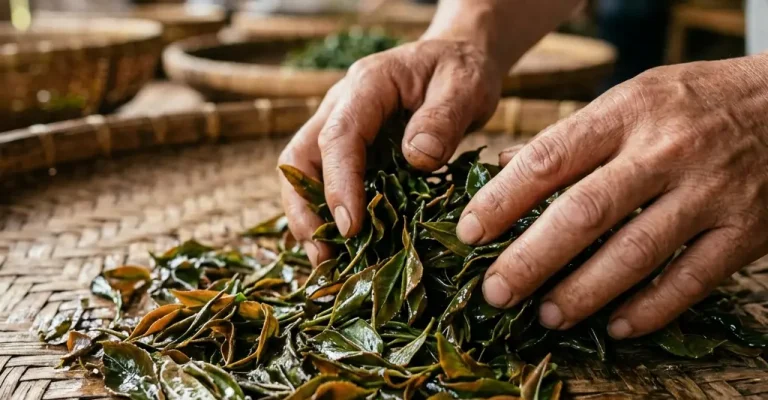
The magic begins at the moment of harvest. When producers pick the leaves from the plant and handle them — whether by withering, shaking, or rolling them into twisted shapes — they intentionally rupture the walls of those tiny cellular capsules. In doing so, the internal contents are released and come into direct contact with the oxygen in the air. This natural chemical reaction between oxygen and the leaf’s compounds is oxidation. It alters the plant’s molecular structure, transforming its original green color into shades of brown, bronze, and copper, while completely changing its flavor and aroma.
The Producer’s Control Panel: Defining Tea Categories
The true skill of a tea master lies in acting as a “timekeeper.” They decide exactly when to start oxidation and, more importantly, the precise moment to stop it by applying heat. It is this control of the biological clock that determines the tea’s category:
Green Tea: Zero Oxidation (0%)
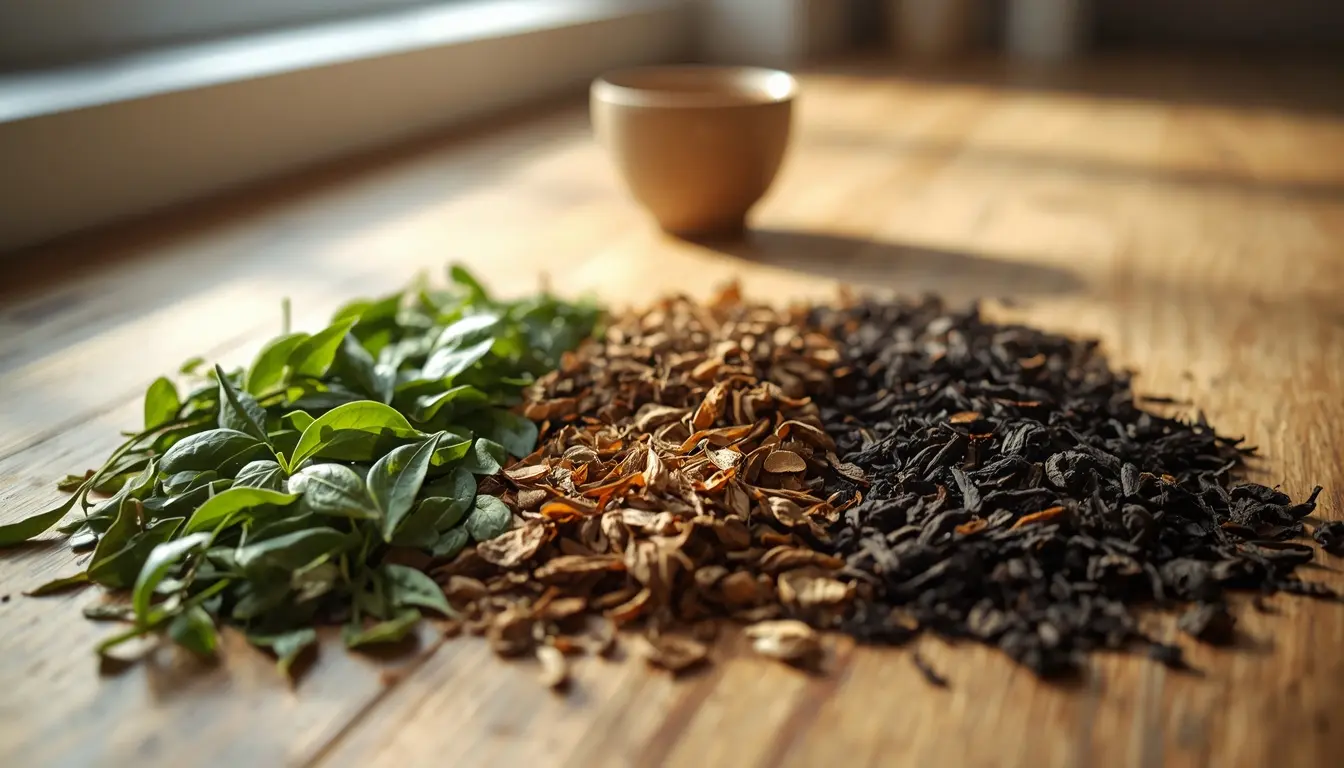
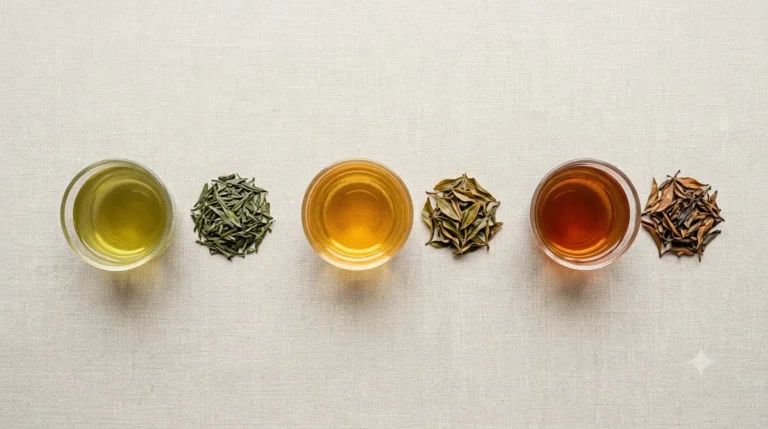
To produce green tea, oxygen is not invited to the dance. As soon as the leaves are harvested, they are rapidly exposed to an intense heat source — either through steam or in large heated pans. This heat permanently deactivates the leaf’s enzymes, preventing oxidation from ever beginning. This is why green tea preserves its vibrant green color and its fresh, grassy, earthy flavor.
Oolong Tea: Partial Oxidation (10% to 80%)
Oolong is the master of balance. The producer lightly bruises the edges of the leaves and allows them to oxidize only up to a certain point under controlled humidity and temperature conditions. When the flavor profile reaches its peak — bringing floral or fruity notes — the tea is heated to stop the process. It lands precisely midway between green and black.
Black Tea: Full Oxidation (100%)
In the case of black tea, the goal is to draw out maximum intensity. The leaves are fully withered and deliberately crushed or rolled to rupture as many cells as possible. They then rest in humid rooms until completely darkened and oxidized. This process transforms the plant’s native compounds into new molecules that deliver the full-bodied, malty flavor and the deep reddish-brown color that defines this tea.

The Impact on Your Health: How Oxidation Changes the Benefits
This molecular transformation directly alters the way tea interacts with your body. No category is superior to another — they simply offer different tools for your health:
- The Pure Protection of Green Tea: Having undergone no oxidation, green tea is exceptionally rich in intact catechins. These act as potent antioxidants that protect cells from aging, support metabolic health, and strengthen the immune system.
- The Digestive Harmony of Oolong: Partial oxidation creates intermediate compounds called theasinensins. These molecules are excellent allies for the gastrointestinal tract, helping break down fats from heavier meals and balancing the gut microbiota.
- The Sustained Energy of Black Tea: Full oxidation transforms catechins into theaflavins and thearubigins. These compounds interact with the tea’s caffeine, causing it to be released into your body slowly and gradually — promoting lasting mental focus and physical energy without the crash associated with coffee.

Conclusion: The Beauty of Natural Transformation
Understanding the tea oxidation process makes us realize that the complexity of the Camellia sinensis universe requires no chemical additives or artificial flavorings. The entire vast palette of flavors, colors, and aromas we enjoy is born from a completely clean and natural interaction between the leaf and the air around us — mediated by millennia of human wisdom. The next time you brew your favorite infusion, watch the color expand through the hot water and remember the beautiful biological journey conducted by oxygen to bring well-being, balance, and presence to your moment.
Sources and Inspiration
- Heiss, M. L., & Heiss, R. J. (2007). The Story of Tea: A Cultural History and Drinking Guide. Ten Speed Press. (Reference work that breaks down the mechanics of oxidation rooms and thermal leaf-fixing methods.)
- Scharbert, S., et al. (2004). “Bioactivity and taste profiles of green, oolong, and black teas.” Journal of Agricultural and Food Chemistry. (Laboratory scientific study analyzing in detail how oxidation reconstructs polyphenols and alters the sensory properties of the leaf.)
- Tominsuka, M., et al. (2012). “Enzymatic browning and oxidation mechanisms in Camellia sinensis processing.” Phytochemistry Reviews. (Research focused on the activity of polyphenol oxidase and peroxidase enzymes during post-harvest tea processing stages.)
Continue Your Vitality Journey
- The Countries That Consume the Most Tea.https://thehealthliving.com/the-countries-that-consume-the-most-tea-the-ranking-will-surprise-you/
- How Many Cups of Tea Does the World Drink Per Day?https://thehealthliving.com/how-many-cups-of-tea-does-the-world-drink-per-day/
Share Your Experience: Now that oxidation is easy to understand, which level of transformation best matches your current taste? Do you prefer the freshness of zero-oxidation green tea or the comforting body of a black tea? Leave your answer in the comments below and let’s enrich our botanical community together!
Transparency Note: This blog values originality and technology. The illustrations in this article were developed with the assistance of artificial intelligence to ensure a unique visual identity that is free of copyright restrictions.
