
ℹ️ Note: This article contains affiliate links. As an Amazon Associate, I earn from qualifying purchases at no extra cost to you.
You sit down to work on an important task, but the distant sound of a conversation, an open browser tab, or a random thought completely hijacks your attention. Hours later, you realize you’ve jumped from project to project, left everything half-finished, and now you’re carrying an immense frustration — feeling exhausted despite not having completed what you needed to. In daily life, this shows up as constantly misplaced keys, blown deadlines, and a persistent feeling that you’re always racing against the clock. Often, the label of “laziness” or “lack of interest” gets applied. But this invisible chaos in organization is the “hidden warning sign” of a mind that operates on a different neurobiological frequency.
For a long time, Attention Deficit Hyperactivity Disorder was believed to be a purely childhood condition that disappeared in adulthood. Science now knows that ADHD in adults not only exists, but manifests in a far more internal and psychological way than a physical one. It’s not an inability to pay attention — people with ADHD can often spend hours in hyperfocus on what they love — but rather a chronic difficulty the brain has in managing and directing that attention toward everyday tasks. This article was designed to meet you where you are, demystify the disorder, and bring practical strategies so you can learn to work with your mind, not against it.

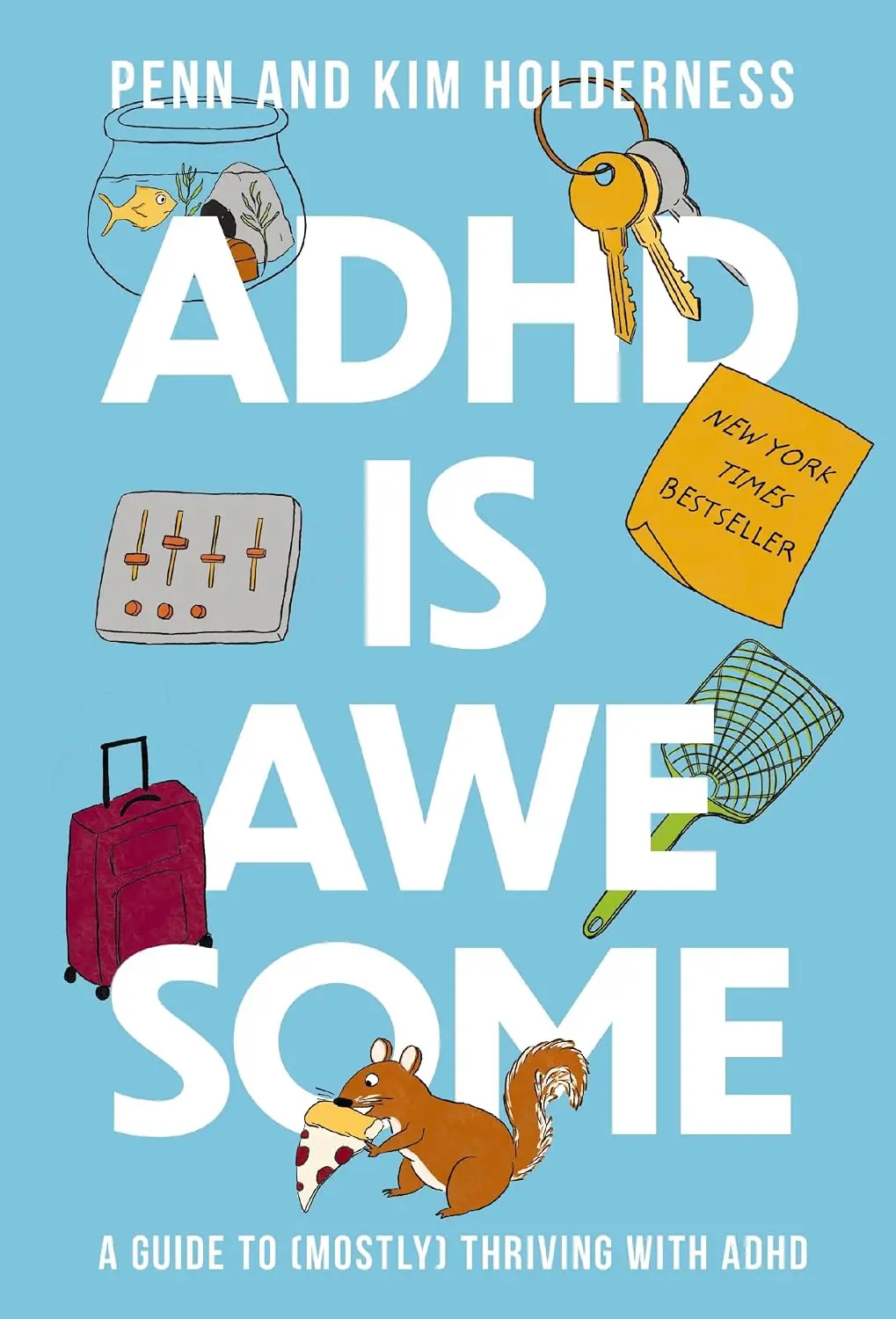
Inside the Connected Mind: Symptoms and Diagnosis in Adulthood
The symptoms of ADHD in adults tend to be subtler than the motor hyperactivity seen in children. Instead of running around or climbing on furniture, adults experience a constant mental restlessness — a feeling that the brain has dozens of tabs open at the same time. Chronic procrastination, impulsivity in conversations or spending, spatial disorganization, and extreme difficulty managing time (known as “time blindness”) are the most common pillars of how the condition manifests in adult life.
When suspecting the condition, it’s very common for people to search online for an ADHD test. While self-assessment questionnaires (such as the widely recognized ASRS-v1.1) are excellent initial screening tools for raising awareness, they do not replace a clinical diagnosis. An actual adult diagnosis is purely clinical and specialized, conducted by psychiatrists or neuropsychologists. It investigates history going back to childhood and rules out other factors, ensuring safe guidance toward treatment — which may involve psychotherapy, lifestyle adjustments, and, when necessary, medication.
The Thin Line: ADHD and Anxiety
One of the greatest complexities of the disorder in adult life is the overlap between ADHD and anxiety. Living for decades without knowing that your brain works differently creates a painful coping mechanism. In order to meet deadlines and not forget commitments, adults with ADHD often use anxiety and the last-minute adrenaline spike as fuel to take action.
This state of constant alertness takes a heavy toll on mental health. Anxiety can emerge both as a co-occurring condition (comorbidity) and as a direct consequence of the accumulated wounds from forgetfulness, distraction-driven mistakes, and the persistent feeling of never reaching one’s own potential. Treating ADHD necessarily involves disarming this survival anxiety and building pathways to productivity grounded in self-compassion and biology — not desperation.

Focus and Productivity Frameworks
Learning how to maintain focus with ADHD requires stopping the attempt to use organizational methods designed for neurotypical minds. If long, rigid to-do lists cause paralysis for you, the secret is to create visual, tactile, low-friction systems. Here are the ADHD productivity tips that truly respect your neurobiology:
- Visual Externalization and the Zero-Friction Rule
The ADHD brain struggles with working memory. If something isn’t visible, it ceases to exist (the “out of sight, out of mind” concept taken to its extreme).
Practical Action: Avoid planning your day in complex apps full of subfolders. Use a whiteboard on the wall or physical sticky notes on your desk with no more than 3 critical tasks for the day. Leave the objects needed to start the task already positioned the night before. Reducing the friction to get started is more important than planning the entire process.
- Task Chunking and Micro-Rewards
Large projects feel like insurmountable mountains to a dopamine system that craves immediate reward — triggering the well-known “ADHD paralysis.”
Practical Action: Never write “Write report” on your list. Break the task down to the point of absurdity: “Open the Word document and type the title.” When the brain understands that the effort required is minimal, resistance drops. Use visual timers (such as the Pomodoro technique adapted to 15 or 20 minutes) to give the brain a visible finish line.
Gentle Stimulation and Calm Alertness
- The Balance of Matcha Green Tea: For the ADHD mind that needs a subtle stimulus to get started on tasks without the anxiety spike that coffee can bring, matcha is ideal. The combined presence of caffeine and L-theanine improves sustained attention and promotes alpha brain waves, associated with relaxed focus.
- The Cognitive Support of Rosemary: Rosemary contains phytochemical compounds that help inhibit the breakdown of acetylcholine — a neurotransmitter essential for memory and focus consolidation. Keeping a warm rosemary infusion at your desk acts as a mental anchoring ritual.
- The Clarity of Ginseng: Known for its adaptogenic herbal properties, ginseng helps build resistance to mental fatigue, supporting clarity and sharp thinking during activities that require prolonged cognitive effort.

Conclusion: Making Peace With Your Biology
Having ADHD as an adult is not a character flaw and has never been a matter of willpower. It is a rich neurological trait that brings real challenges in modern life, but that also confers a unique capacity for innovation, out-of-the-box thinking, and resilience. By implementing ADHD productivity strategies tailored specifically to you, tending to the relationship between ADHD and anxiety, and organizing your environment in a supportive way, you reclaim your role as the main character of your own story. Respect the rhythm of your mind and appreciate the unique journey of discovering your own way to flourish.
Sources and Inspiration
- Barkley, R. A. (2015). Attention Deficit Hyperactivity Disorder: A Handbook for Diagnosis and Treatment. Guilford Press. (The world’s leading medical reference on diagnostic criteria and the manifestation of ADHD in adult life.)
- Faraone, S. V., et al. (2021). “The World Federation of ADHD International Consensus Statement: 208 Evidence-based conclusions about the disorder.” Neuroscience & Biobehavioral Reviews. (Global consensus consolidating scientific evidence on the neurobiological, genetic, and behavioral impact of ADHD in adults.)
- Kooij, S. J., et al. (2010). “European Consensus Statement on Diagnosis and Treatment of Adult ADHD: The European Network Adult ADHD.” BMC Psychiatry. (Clinical guideline detailing adult ADHD symptoms and the most frequent comorbidities, such as anxiety disorders.)
Continue Your Vitality Journey
- Why Are You Always Tired?https://thehealthliving.com/why-are-you-always-tired-the-truth-about-mental-fatigue-and-how-to-get-your-energy-back/
- Burnout Is Not Tiredness:https://thehealthliving.com/burnout-is-not-tiredness-the-diagnosis-your-body-is-trying-to-hide/
Share Your Story: Do you relate to these symptoms, or have you already received an ADHD diagnosis in adulthood? What is your biggest challenge when it comes to maintaining focus in your daily routine? Leave your story in the comments below and let’s build a space of support and clarity together!
Transparency Note: This blog values originality and technology. The illustrations in this article were developed with the assistance of artificial intelligence to ensure a unique visual identity that is free of copyright restrictions.
