
ℹ️ Note: This article contains affiliate links. As an Amazon Associate, I earn from qualifying purchases at no extra cost to you.
What If Your Tiredness Isn’t a Lack of Sleep — But a Lack of Silence?
You wake up, pour your coffee, and still feel like your battery is at 10%. It’s not the muscle soreness from a hard workout — it’s an invisible weight sitting just behind your eyes. A struggle to decide what to make for dinner or focus on a single page of a book. You slept eight hours, but you wake up feeling like your brain’s hard drive is still processing yesterday’s problems.
Do you feel like you’re constantly running on low-power mode? Like your motivation has vanished without an obvious reason? The truth that few people admit is that modern tiredness is rarely physical. We are living through an epidemic of mental fatigue — a state where the brain, saturated by micro-decisions and non-stop stimuli, simply stops responding. Understanding the difference between being tired and being exhausted is the first step toward getting your life back.
Physical Tiredness vs. Cognitive Exhaustion: What’s the Difference?
Not every kind of tiredness is solved by a nap. According to Harvard Health Publishing, mental fatigue is the result of overusing the brain’s cognitive resources.
- Physical Tiredness: This is repaired by biological rest. After a good night’s sleep, your body feels refreshed and ready to go.
- Mental Fatigue (Exhaustion): This is a state of saturation. You can sleep ten hours, but if you haven’t “cleared” the open mental processes running in the background, the brain fog will still be there when you wake up. It’s like a computer with too much RAM in use — no matter how long you leave it plugged in, it will keep running slowly if the programs are never closed.

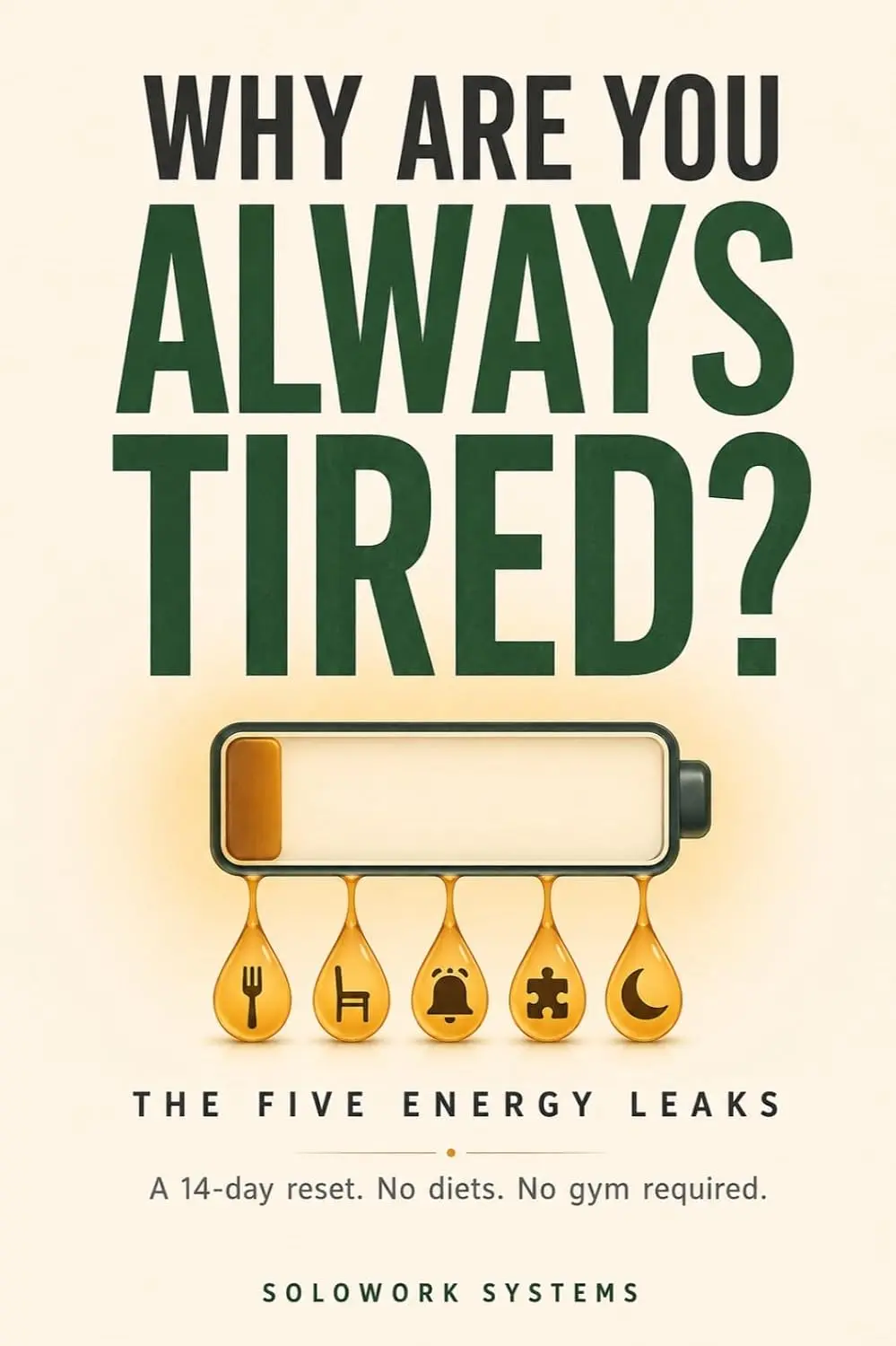
The “Energy Drains” Nobody Warns You About
What’s actually depleting your mental battery? It’s not just the big problems — it’s the micro-habits of modern life.
The Hidden Cost of Multitasking We’ve been taught that multitasking is a virtue. In reality, the brain burns a massive amount of energy every time it “switches channels.” That constant toggling between emails, notifications, and conversations is exactly what causes chronic mental fatigue.
Decision Fatigue From the filter we pick for a photo to which email to answer first, we make thousands of micro-decisions every single day. By late afternoon, your willpower reserve is completely empty — making it nearly impossible to maintain focus or think clearly.
Micro-Habits: How to Reset Your Brain in 5 Minutes
Neuroscientist Judson Brewer highlights that curiosity and sensory focus are among the most powerful antidotes to exhaustion. We don’t need a month-long vacation — we need quality pauses.
The “Intentional Soft Focus” Technique Try this exercise to relieve mental pressure and reduce visual fatigue:
- Look away from the screen. Find the farthest point you can see — out a window or down a long hallway.
- Soften your gaze. Don’t focus on anything specific. Let your vision go slightly blurry and peripheral for 2 minutes.
- Breathe. Feel the air moving in and out without trying to control the rhythm. This signals to your nervous system that the “threat” of work has passed.

The L-Theanine
Green tea — particularly Matcha or Gyokuro — is a powerful ally against mental fatigue, thanks to L-theanine, an amino acid that promotes a state of “relaxed alertness.”
- Protocol Tip: Prepare your tea with your phone set aside. Focus only on the warmth of the mug and the aroma rising from it. This sensory micro-detox is what actually recharges the mind.

Conclusion and Next Steps
Being tired all the time should not be your new normal. Mental fatigue is your mind asking for curation — not more coffee. Start today by closing the mental tabs that don’t need to be open. Choose one of the rituals above and give your brain the gift of nothing, even if just for five minutes.
Further Reading
- Constant Anxiety:https://thehealthliving.com/constant-anxiety-whats-behind-the-silent-rise-and-how-to-break-the-cycle-in-5-minutes/
- Silent Depression:https://thehealthliving.com/silent-depression-why-you-function-normally-but-feel-completely-drained-inside/
Sources and Inspiration
- Harvard Health Publishing — Guidelines on chronic fatigue, stress, and cognitive health.
- Judson Brewer — Research on anxiety management and focus habits for preserving mental energy.
- National Institute of Mental Health (NIMH) — Data on the impact of psychological burnout on physical health.
Do you feel like your tiredness is more physical or more mental? What happens when you actually try to do nothing? Let’s talk about it in the comments!
Transparency Note: This blog values originality and technology. The illustrations in this article were developed with the assistance of artificial intelligence to ensure a unique visual identity that is free of copyright restrictions.
