ℹ️ Note: This article contains affiliate links. As an Amazon Associate, I earn from qualifying purchases at no extra cost to you.
Every time we hold a warm cup of tea between our hands, we are taking part in a ritual that has survived empires, wars, and revolutions. But for this moment of pause and well-being to exist today, someone — in a very distant past — had to take the first step. Behind the mist of time, there is a pioneer — or perhaps an entire people — who dared to look at a wild leaf and see in it a treasure.
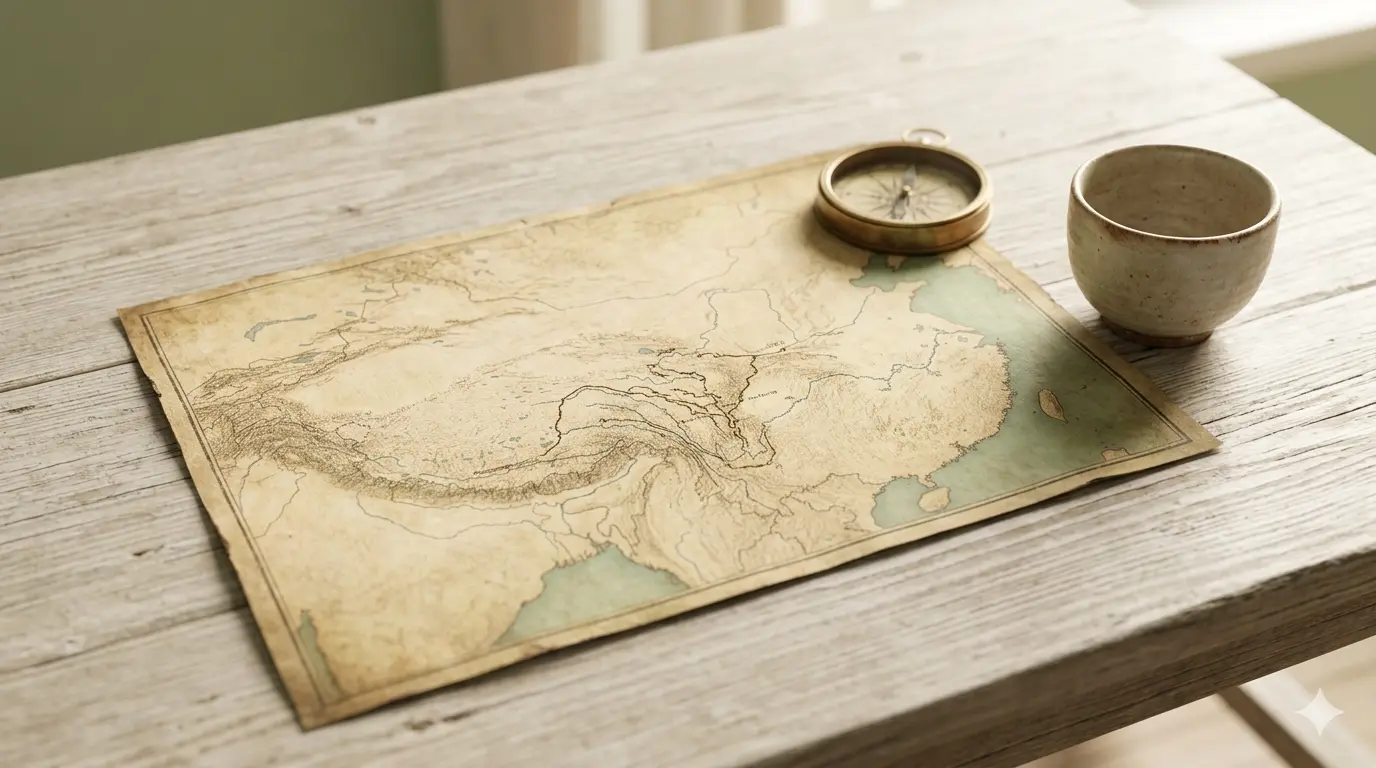
Although legend points to an emperor, the true story of who discovered tea takes us on a journey through the humid mountains of Southwest Asia, where human instinct and nature met for the very first time.
The First Sip: Between Emperors and Tribal Peoples
The answer to “who discovered tea” depends on who you ask. If we look to mythology, we find Shennong, the legendary healer-emperor we have already mentioned. He embodies the intellectual discovery: the man who catalogs, experiments, and understands tea as a tool for purifying the body and mind.
However, anthropological history gives us a different — and equally rich — answer.
The People of Yunnan: The True Heirs of the Forest
Before tea reached the imperial palaces, it belonged to the ethnic peoples of the forests of Yunnan and Sichuan, such as the Wa and Bulang tribes. For these peoples, Camellia sinensis was not just a drink, but a food and a spiritual medicine. It was these anonymous ancestors who learned to identify the best wild trees and to work with their leaves to reduce bitterness, creating the first prototypes of what we now call tea.


From Food to Drink: The Evolution of the Discovery
The discovery of tea was not a single event, but a process of gradual refinement. Imagine that, in the beginning, the leaves were chewed fresh or cooked in broths as if they were leafy green vegetables.
The Role of Buddhist Monks
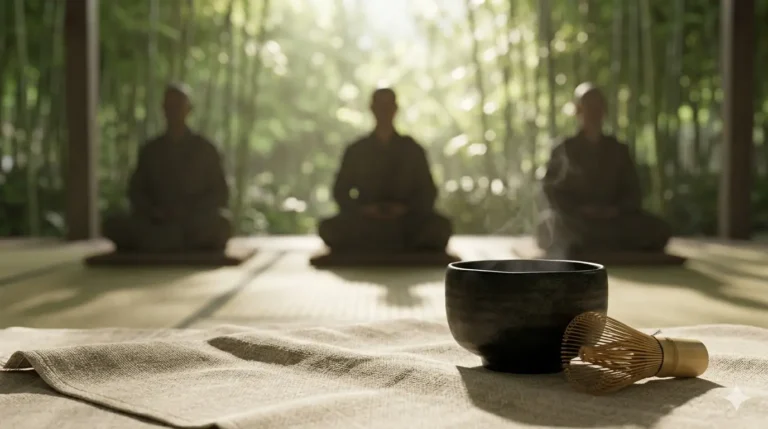
If the tribal peoples discovered the plant and the emperor validated it, it was the Buddhist monks who discovered its spiritual purpose. During the first millennium, monks noticed that tea helped keep the mind alert and the body relaxed during the long hours of meditation. They were the great “marketers” of antiquity, carrying seedlings and seeds from monastery to monastery, transforming tea into a tool for mental clarity and spirituality.
The Spread of the Secret: How the World “Discovered” Tea
The widespread popularity of the drink was firmly established during the Tang Dynasty (618–907 A.D.). It was during this era that tea stopped being a regional tonic and became the heart of the Chinese economy.
The famous Tea Horse Road caravans emerged — dangerous paths crossing towering mountains to trade precious Chinese tea for Tibetan warhorses. Through these routes, peoples from different cultures and religions “discovered” tea and adapted it to their own realities, proving that the discovery of a drink is never static — it travels and transforms.
The Legacy of Lu Yu: The Man Who Taught the World to Drink Tea
If Shennong discovered the plant, Lu Yu discovered its soul. In the eighth century, he published the Cha Jing, the first book dedicated exclusively to tea. Lu Yu was not a nobleman, but an orphan raised in a monastery who devoted his life to studying water, fire, and leaves. He taught that preparing tea requires presence and respect. By defining the rules for the perfect infusion, Lu Yu made it possible for all of us — even today — to discover tea in a new way with every cup.
Conclusion: A Discovery That Renews Itself With Every Cup
In the end, who discovered tea? Was it the emperor in his garden, the monk in his meditation, or the farmer in the forest? The truth is: all of them. Tea is a collective discovery of humanity.
Today, when you establish the micro-habit of preparing your tea, you become the latest link in that chain. You rediscover tea every time you allow it to bring balance to your busy day.
Sources and Inspirations
- James Norwood Pratt: Author of Tea Lover’s Treasury, one of the world’s most respected references on the cultural journey of the drink.
- Victor Henry Mair & Erling Hoh: Authors of The True History of Tea, a foundational book that cross-references linguistic and archaeological data.
- Professor Gary Sigley: Research specialist on the Tea Horse Road, whose studies reveal the impact of trade routes on the expansion of tea culture.
Continue your journey on the blog:
- Why Are You Always Tired?https://thehealthliving.com/why-are-you-always-tired-the-truth-about-mental-fatigue-and-how-to-get-your-energy-back/
- How to Have More Natural Energy (Without Coffee)https://thehealthliving.com/how-to-have-more-natural-energy-without-coffee-the-method-that-actually-works/
Do you believe tea was an accidental discovery or an ancestral wisdom passed down from generation to generation? Tell me in the comments!
Transparency Note: This blog values originality and technology. The illustrations in this article were developed with the assistance of artificial intelligence to ensure a unique visual identity that is free of copyright restrictions.
