ℹ️ Note: This article contains affiliate links. As an Amazon Associate, I earn from qualifying purchases at no extra cost to you.
You come across a news story or an international auction catalog and discover that a small pressed disc of dried tea leaves sold for the price of a luxury car or a high-end apartment. To the Western mind — accustomed to seeing tea as a disposable supermarket tea bag for cold days — this seems completely absurd or the result of pure market speculation. This incomprehension is the “hidden warning sign” of how little we understand the biological processes of living aging and the cultural depth that transform botany into a true liquid work of art.
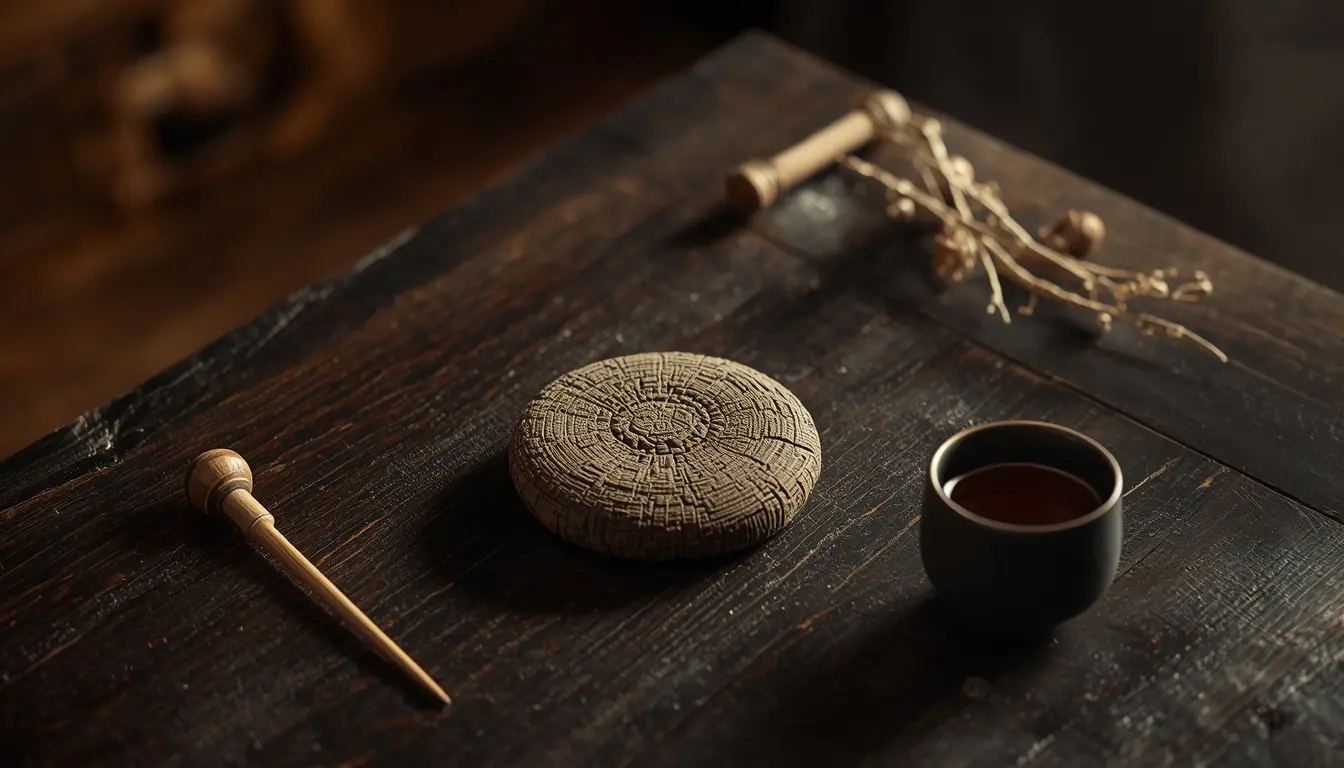
The world of teas has an absolute royalty, and its name is Pu-erh (also known as Dark Tea). While nearly every other tea variety in the world races against time to be consumed as quickly as possible — before losing its freshness and essential oils — Pu-erh does exactly the opposite. It defies time. It is the only category of tea whose value, sensory complexity, and medicinal properties multiply as years and decades pass. This article will unravel the biological, geographical, and historical secrets that make Pu-erh tea the rarest, most valuable, and most sought-after beverage among the world’s great collectors.
The Sacred Origin: Yunnan’s Terroir and the Ancestral Trees
For a tea to be legitimately called Pu-erh, it must comply with an extremely strict geographical designation of origin located in Yunnan Province, in southwestern China. This region is the original evolutionary birthplace of Camellia sinensis. It is there, in mist-covered, hard-to-reach mountains, that large-leaf varieties (Camellia sinensis var. assamica) grow.
The first factor in Pu-erh’s rarity lies in the age of the plants used. While common teas are harvested from young, commercial bush plantations, the world’s most valuable and sought-after Pu-erhs (known as Gushu) are harvested exclusively from ancient tea trees, many of which are between 300 and over 1,000 years old. These wild trees have roots that penetrate dozens of meters into the mountainous soil, absorbing deep minerals and unique organic compounds that give the leaf a mineral complexity and a bodily energy (called Cha Qi by tea masters) that cannot be replicated by young plants.
The Alchemy of Microbiology: Living Tea vs. Accelerated Tea
The great dividing line between Pu-erh and all other tea categories is that it does not go through mere chemical oxidation processes — instead, it undergoes a living biological fermentation, driven by microorganisms (beneficial fungi and bacteria, such as Aspergillus niger). It is this process that allows the tea to evolve like a fine wine over the course of years. There are two classic ways to produce Pu-erh:
Sheng Pu-erh (The Raw / Ancestral Green)
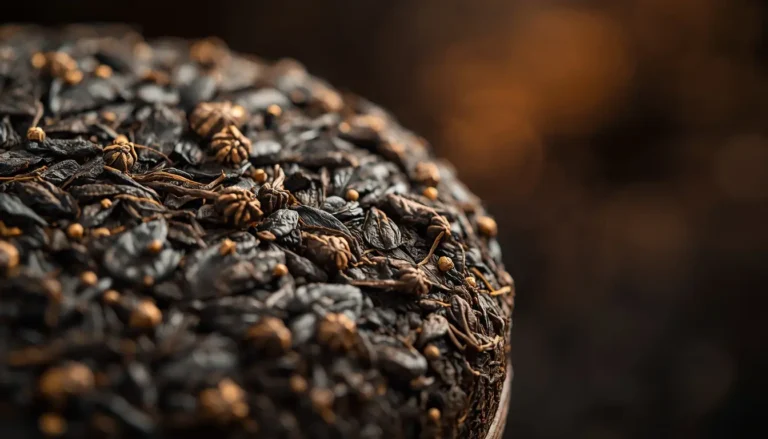
- The Process: The leaves are harvested, withered, lightly heated in pans to halt the initial oxidation, and sun-dried (producing the base material called Maocha). These leaves are then pressed into disc shapes (cakes), bricks, or small spheres and stored in cellars with strictly controlled humidity and temperature.
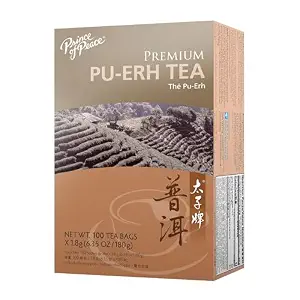
- The Time Factor: Sheng Pu-erh is the true collector’s item. Initially, it is astringent, bitter, and herbaceous. Over 10, 20, or 50 years of storage, microorganisms slowly transform the polyphenols. The tea darkens and becomes velvety, developing notes of wet earth, camphor, leather, dark fruits, and a deep residual sweetness. The older it is, the rarer — and infinitely more expensive — it becomes.
Shou Pu-erh (The Cooked / Processed)
- The Process: Developed in the 1970s by Yunnan state factories to meet the explosion in global demand, this method accelerates aging through a technique called Wo Dui (wet-pile fermentation).
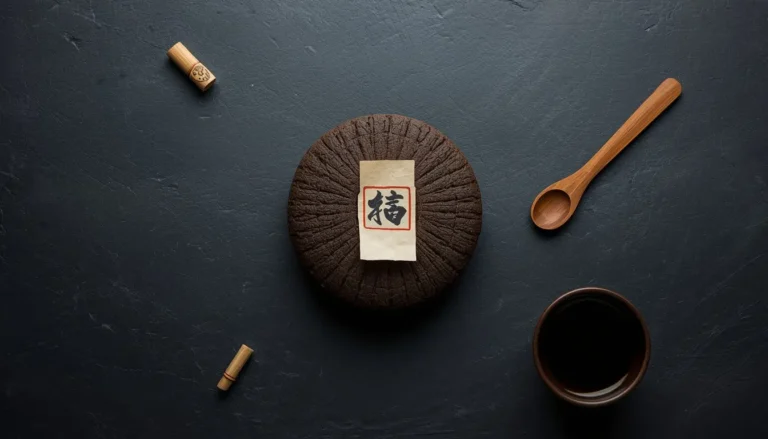
- The Time Factor: Maocha leaves are piled in large warehouses, moistened with water, and covered with tarps to create a warm microclimate. This causes the bacterial fermentation that would take 25 years to occur in just 45 to 60 days. Shou Pu-erh is born ready to drink, delivering an extremely dark, dense, opaque brew with a mild earthy flavor, zero bitterness, and notes reminiscent of cacao and fine wood.
The Gongfu Cha Ceremony and the Awakening of the Mind
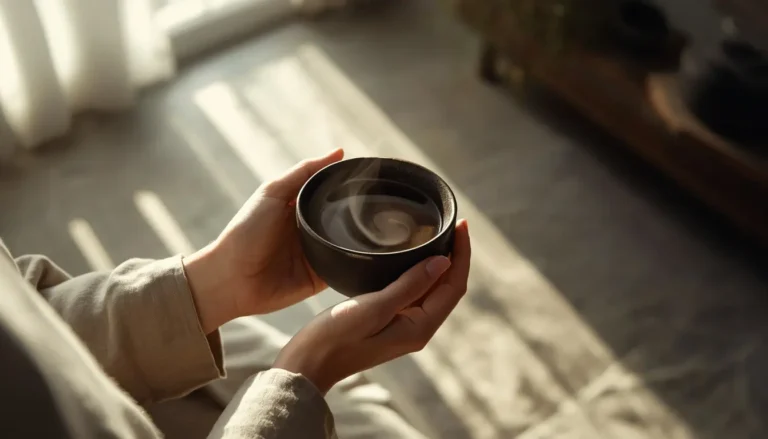
- The Practice of Awakening: Pu-erh demands respect in its preparation. It is traditionally brewed using the Gongfu Cha method, with small Yixing clay teapots or a Gaiwan (lidded cup). The first infusions are short (5 to 10 seconds) and serve to “awaken” the pressed leaves and rinse away the dust of time.
- The Digestive Effect and Bodily Clarity: Biologically, Pu-erh fermentation produces natural statins and compounds that dramatically assist the liver in breaking down lipids and digesting heavy meals. Collectors are also drawn to Pu-erh for the deep sense of grounding and focused relaxation it induces in the nervous system.
- The Infinite Infusions: Unlike a common green tea that loses its potency after the second steeping, the leaves of a good aged Pu-erh can be steeped 15 to over 20 consecutive times in the same session, revealing completely different flavor layers with each round.
Conclusion: A Liquid Relic for Your Daily Routine
What makes Pu-erh tea so valuable is not just marketing or its geographical scarcity, but the fact that it is a botanical time capsule. Drinking a 30-year-old Pu-erh means savoring the climate, the air, the rain, and the microbial work of decades past — all preserved in a leaf harvested from a tree that witnessed the fall of empires. Whether you are a beginner exploring the earthy comfort of a Shou Pu-erh or an enthusiast investing in the evolution of a Sheng Pu-erh, making room for this category in your routine transforms the act of drinking tea into a mystical experience of reconnection with time and the earth.
Sources and Inspirations
- Zhang, L. (2014). The Transformation of Pu-erh Tea: Culture, Market, and Ecology in Yunnan, China. University of Washington Press. (A comprehensive anthropological and economic study detailing the cultural valorization, ancestral trees, and market dynamics of Pu-erh.)
- Gong, J. S., et al. (2010). “Changes in phytochemical composition and antioxidant capacity of Pu-erh tea during fermentation process.” Food Chemistry. (Laboratory research analyzing how wet-pile microbial fermentation and natural aging break down tannins and alter the molecular profile of the tea.)
- Heiss, M. L., & Heiss, R. J. (2007). The Story of Tea: A Cultural History and Drinking Guide. Ten Speed Press. (A chapter dedicated to Pu-erh, documenting the historical “Tea Horse Road” trade route and the technical differences between Sheng and Shou production.)
Continue Your Vitality Journey
- How Many Cups of Tea Does the World Drink Per Day?https://thehealthliving.com/how-many-cups-of-tea-does-the-world-drink-per-day/
- Hot or Iced? How Tea Consumption Varies Around the World.https://thehealthliving.com/hot-or-iced-how-tea-consumption-varies-around-the-world/
Explore the Earthy Universe: Had you heard of this living, aged tea category before? Have you ever had the chance to experience the unique earthy profile of a Pu-erh? Share your story or your questions in the comments below and let’s explore these Eastern mysteries together!
Transparency Note: This blog values originality and technology. The illustrations in this article were developed with the assistance of artificial intelligence to ensure a unique visual identity that is free of copyright restrictions.
