ℹ️ Note: This article contains affiliate links. As an Amazon Associate, I earn from qualifying purchases at no extra cost to you.
Most of us think of tea as a moment of relaxation — a daily wellness micro-habit. But if we travel back in time, we discover that Camellia sinensis once held a very different status: that of an extremely high-value economic asset, capable of moving empires and serving as a monetary standard across vast regions.
Imagine opening your wallet and finding, instead of bills or coins, compact bricks of dried tea. It sounds like fiction, but for centuries, that was the reality in much of Central Asia. This is just one of the fascinating stories about how tea shaped the world far beyond our cup. Let’s explore five historical facts that will change the way you look at this ancient drink.
Tea as Money: The Bricks That Bought Kingdoms
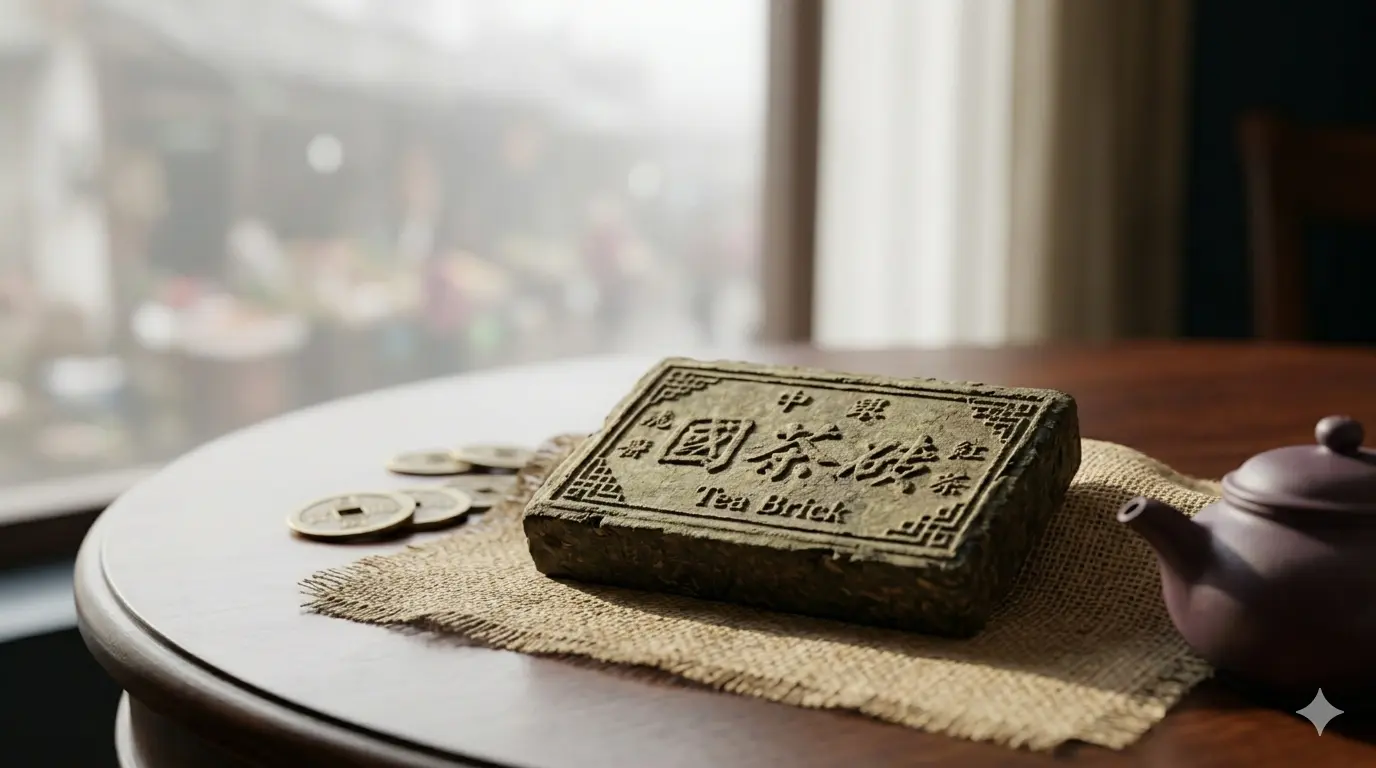
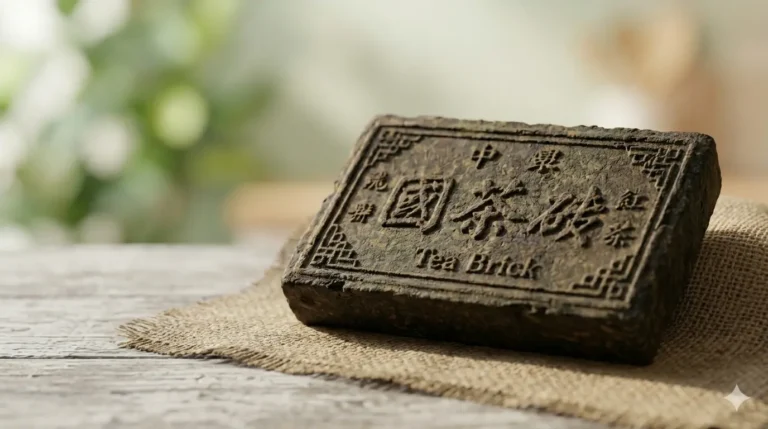
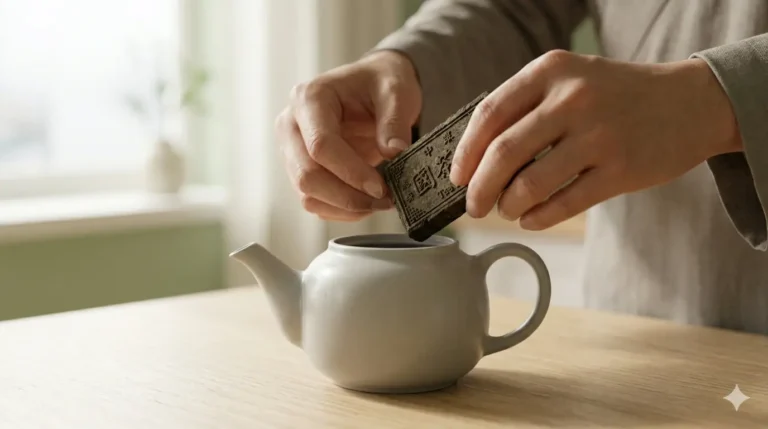
For more than a thousand years, tea was not just consumed — it was used to pay taxes, wages, and for the trade of high-value goods. In Imperial China, Mongolia, Tibet, and Siberia, tea leaves were tightly pressed into wooden molds, forming solid blocks known as “tea bricks.”
These bricks were ideal as currency: they were durable, easy to transport in caravans, and had intrinsic value. The highest-quality tea was reserved for the nobility, while lower-grade bricks circulated as money among the general population.
The Tea Horse Road: A Monetary System Built on Leaves
The most striking example of this system was the Tea Horse Road — a trade network that crossed the rugged mountains between China and Tibet. China desperately needed Tibet’s robust warhorses, and Tibet, in turn, desired Chinese tea for its diet and Buddhist rituals. The trade was straightforward: one warhorse was worth a specific number of tea bricks. This trade route not only moved goods but cemented tea’s role as the true currency of Central Asia.
Tea as a Catalyst: The Spark of a Global Revolution
It is impossible to talk about tea’s historical highlights without mentioning the Boston Tea Party of 1773. This event was not just a protest against taxes — it was the moment tea became the symbol of American colonial resistance against British rule.
When American colonists, disguised as Mohawk natives, threw 342 chests of East India Company tea into the waters of Boston Harbor, they were not simply rejecting a drink. They were rejecting “taxation without representation.” This act of defiance was the spark that united the colonies and paved the way for the American War of Independence. Tea, without firing a single shot, helped forge a new nation.
Tea as a Spy: The Botanist Who Stole a Monopoly
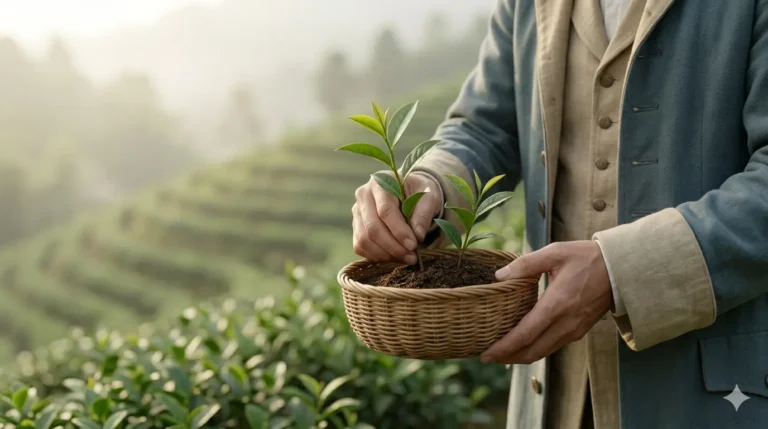
The globalization of tea as we know it today is the result of one of the greatest cases of industrial espionage in history. In the nineteenth century, Great Britain was economically dependent on China for its tea supply. To break that monopoly, the East India Company hired a Scottish botanist named Robert Fortune.
His mission was to infiltrate China’s tea-producing regions — strictly off-limits to foreigners — and steal the secrets of cultivation and processing, along with seedlings and seeds. Fortune shaved his head, adopted the disguise of a Chinese merchant, and traveled undercover for years. He not only obtained the plants but recruited Chinese experts who helped establish tea plantations in British India, forever changing the global economic balance.
Tea as a Diplomat: Royal Marriages and Power Alliances
Tea also played a crucial role in European diplomacy and royalty. The popularization of tea in Great Britain is often credited to the Portuguese princess Catherine of Braganza, who married King Charles II of England in 1662.
Catherine was an avid tea drinker — tea was already a luxury in Portugal. Upon arriving at the British court, she introduced the habit, turning it into a sophisticated trend among the aristocracy. Tea became a status drink and a central element in social rituals, sealing cultural and economic alliances between Portugal and Great Britain, and laying the foundation for the British tea culture we know today.
Conclusion: Tea as a Wellness Asset
Looking at these historical highlights, we realize that tea is far more than just a flavorful drink. It is a connecting thread running through human history, influencing economies, sparking revolutions, driving espionage, and sealing powerful alliances.
Today, when you prepare your cup of tea, you are not just brewing an infusion — you are taking part in a rich and complex global tradition. At TheHealthyLiving, we celebrate this leaf not only for its fascinating past, but for its present role as a genuine and powerful ally on our wellness journey.
Sources and Inspirations
- Victor Henry Mair: Author of The True History of Tea, a book that cross-references linguistic and archaeological data to trace tea’s journey.
- Sarah Rose: Author of For All the Tea in China, a foundational work on Robert Fortune’s espionage mission.
- Gary Sigley: Research specialist on the Tea Horse Road, whose studies detail the economic role of tea bricks.
Continue your journey on the blog:
- The True Origin of Teahttps://thehealthliving.com/the-true-origin-of-tea-between-ancient-legends-and-the-revelations-of-modern-archaeology/
- Who Discovered Tea?https://thehealthliving.com/who-discovered-tea-the-fascinating-journey-of-the-pioneers-who-revealed-the-secret-of-camellia-sinensis/
Did you already know any of these historical facts about tea? Tell me in the comments which one surprised you the most!
Transparency Note: This blog values originality and technology. The illustrations in this article were developed with the assistance of artificial intelligence to ensure a unique visual identity that is free of copyright restrictions.
