
ℹ️ Note: This article contains affiliate links. As an Amazon Associate, I earn from qualifying purchases at no extra cost to you.
You’re in a work meeting, in the elevator with a neighbor, or even at dinner with friends. Silence settles in.
What do you do? You probably reach for your phone.
That gesture — almost automatic at this point — is a symptom of something deeper. It’s not just boredom. Most of the time, it’s an escape.
The feeling that face-to-face interaction is getting harder, more draining, and even more intimidating is real — and it’s growing. If you feel like your social battery runs out faster today than it did five years ago, you’re not alone.
There’s a quiet cry in our modern society: the struggle to connect authentically without the buffer of a screen. But why is this happening?
The Age of Disconnected Connection
The modern paradox is both fascinating and cruel. We are more “connected” than at any other point in human history. One click can take us to anyone, anywhere.
And yet, this digital hyperconnectivity has, ironically, created a deeply human disconnection.
Most of our interaction time is now mediated by algorithms. The result? Our real-time social “muscles” are atrophying.
Interacting in person requires reading body language, interpreting tone of voice, and handling the unexpected — skills that text messages and emojis simply can’t replace.
The Danger of “Stage vs. Backstage”
MIT psychologist Dr. Sherry Turkle describes this brilliantly. On social media, we “edit” and “present” a polished version of ourselves. That’s our stage.
Real life, however, happens backstage. It’s full of stumbles, awkward pauses, sweaty palms, and no delete button.
Modern social anxiety often grows from this fear: the fear that our backstage self — who we actually are in the moment, with all our vulnerabilities — won’t measure up to the digital stage we’ve carefully built.
The Mind in “Avoidance Mode”
When interactions start to feel too risky, our minds shift into protection mode.
The exhausted, anxious brain begins to label social situations not as opportunities for connection, but as threats to our ego or emotional wellbeing.
This leads to avoidance behavior. We cancel plans, dodge video calls, and prefer to handle everything by text. The immediate relief feels great — but the long-term cost is isolation and an even deeper anxiety.

How to Reconnect (Without Breaking) Through Micro-Habits
The path back isn’t forcing yourself to become the life of the party. It’s a gradual process of re-educating your nervous system — showing it that human connection is safe.
Grounded in Cognitive Behavioral Therapy (CBT) and mindfulness research, here are small rituals you can start today.
- The “Micro-Interaction” With No Agenda Most of our interactions today are transactional — ordering a coffee, confirming an email.
The habit: once a day, have a 15-second interaction with no practical “gain” attached.
It could be complimenting your neighbor’s plant, genuinely asking the cashier how their day is going, or simply smiling and saying hello to someone on the street. This trains your brain to handle spontaneous, low-stakes social moments.
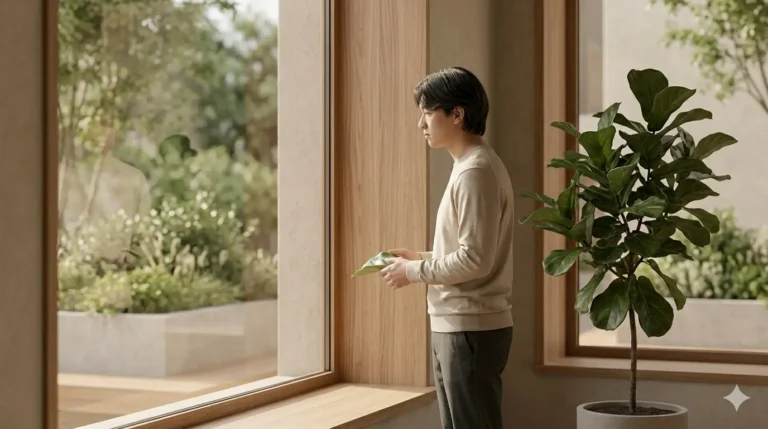
- Active Contemplation and the Phone Detox When you’re in a public space — a line, public transit, a waiting room — resist the pull of your phone for just 2 minutes.
The habit: use that time for active contemplation of your surroundings. Notice the colors, the sounds, the textures around you.
This shifts your focus away from internal anxiety and anchors you in the present moment, helping to deactivate fight-or-flight mode.
- The Social “Brain Dump” Before Bed Social anxiety often follows us into the night, with the brain replaying every interaction and perceived misstep from the day.
The habit: before you lie down, grab a piece of paper and do a “mental flat lay.”
Write briefly about the interactions you had. Don’t judge them. Just organize. “I talked to X about Y. I felt Z.” This frees your brain from having to process that information during sleep, making real rest possible.

Conclusion: The Journey Back to Ourselves
Recognizing that connecting with others feels hard is the first step toward changing course. Modern social anxiety isn’t a factory defect — it’s a natural response to a digitally saturated environment.
We don’t need to give up technology, but we do need to reclaim our ability to be present, vulnerable, and genuinely connected — one micro-habit at a time. Rebuilding our “social muscle” starts with the courage to put the phone down and look up.
Which of these social micro-struggles hit closest to home this week? Share in the comments below — let’s talk about reactivating these connections together!
Sources and Inspiration
- Sherry Turkle (MIT) — Her foundational research on how technology reshapes our relationships and the concept of Alone Together formed the technical backbone for the “stage vs. backstage” discussion. (Reference: Turkle, S. (2011). Alone Together: Why We Expect More from Technology and Less from Each Other. Basic Books.)
- Cognitive Behavioral Therapy (CBT) — The framework around avoidance behavior and gradual micro-exposure strategies (such as the micro-interactions) is grounded in validated CBT clinical principles for social anxiety.
- Mindfulness and Emotional Regulation — The practice of active contemplation and the mental “brain dump” for deactivating defense mode are anchored in mindfulness research and positive psychology for stress reduction.
Transparency Note: This blog values originality and technology. The illustrations in this article were developed with the assistance of artificial intelligence to ensure a unique visual identity that is free of copyright restrictions.
