ℹ️ Note: This article contains affiliate links. As an Amazon Associate, I earn from qualifying purchases at no extra cost to you.
You decide to start taking better care of your health and resolve to swap the excess coffee or sodas for tea. When you reach the beverages aisle, you’re faced with a shelf packed with labels: green tea for metabolism, white tea for skin, black tea for energy, and the mysterious oolong. Not knowing exactly which one to choose, you grab the first one you see or end up picking whichever flavor sounds most palatable. This confusion in the face of so many options is the “hidden warning sign” of how we consume functional compounds without truly understanding what they are doing inside our biology.
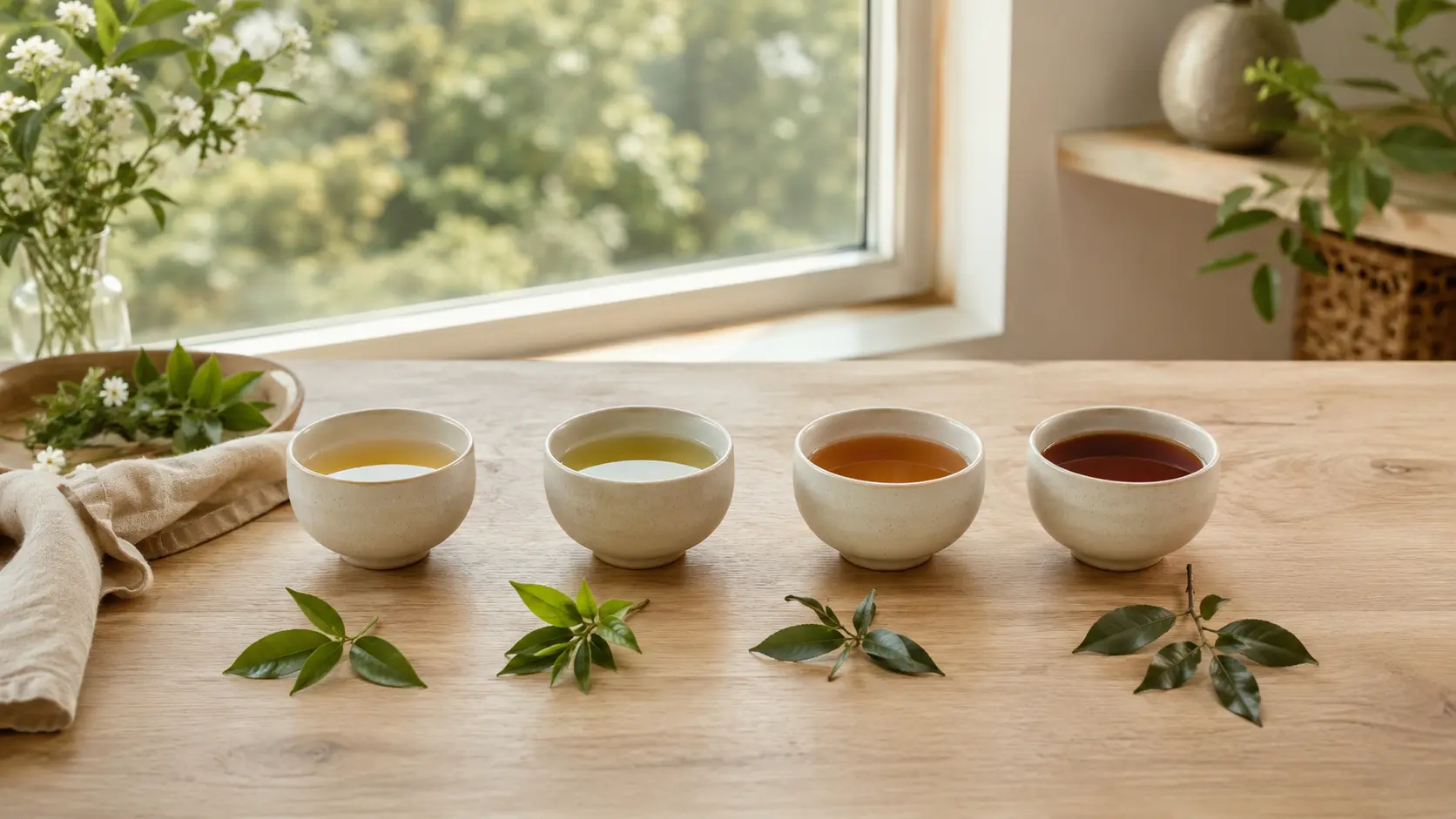
Although all of these teas come from the exact same plant — Camellia sinensis — treating them as equals is a mistake that undermines your wellness goals. Each variety has a unique chemical signature, developed through the level of oxygen exposure during production. These differences dramatically alter not just the flavor and color in the cup, but also the caffeine content, the antioxidant profile, and the way the beverage interacts with your nervous and metabolic systems. This article will break down the real differences between the four main types of tea so you know exactly which one fits the needs of your body and mind.
The Oxidation Spectrum: How Chemistry Transforms the Leaf
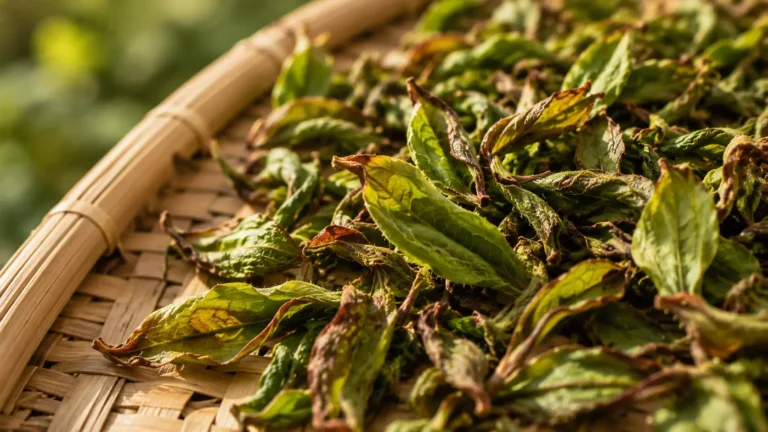
To truly understand the differences, we need to look at a biological process called oxidation. When tea leaves are harvested, their enzymes come into contact with oxygen, altering their chemical compounds.
If the producer immediately halts this process using heat, the tea stays “young” and green. If the leaf is allowed to oxidize completely, it darkens and develops robust flavor notes. It is this precise, minute-by-minute control of time and air exposure that divides Camellia sinensis into categories with entirely distinct therapeutic and sensory properties.
The Four Varieties: Profile, Flavor, and Real Benefits
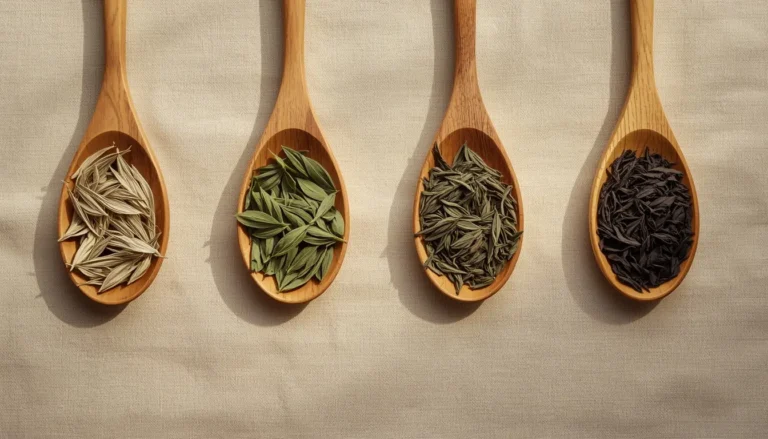
- White Tea: The Antioxidant Delicacy
- What’s real: Made only from the youngest spring buds and leaves, it undergoes almost no processing — just a quick drying step.
- The Chemistry in Your Body: Because it is not abruptly heated or oxidized, white tea preserves the highest concentration of pure catechins (especially EGCG). It contains a surprisingly subtle amount of caffeine and a high density of polyphenols.
- Flavor Profile: Extremely light, floral, subtly sweet, and nearly transparent in color.
- Green Tea: The Metabolic and Cognitive Activator
- What’s real: The leaves are harvested and immediately heated — either by steam (the Japanese method) or in pans (the Chinese method) — to lock oxidation at zero percent.
- The Chemistry in Your Body: By preserving chlorophyll and catechins, green tea is a potent cellular protector. It is well known for its balanced combination of caffeine and L-theanine, an amino acid that crosses the blood-brain barrier and stimulates alpha brain waves, generating focus without the typical jitteriness of coffee.
- Flavor Profile: Herbaceous, vegetal, sometimes marine or astringent, with a vivid yellow-green color.
- Oolong Tea: The Master of Balance
- What’s real: Known as blue tea, oolong undergoes partial oxidation (ranging from 10% to 80%). Its leaves are intentionally tossed and bruised so that only portions of them oxidize before the process is halted with heat.
- The Chemistry in Your Body: Due to the partial oxidation, oolong develops a unique group of antioxidants called theasinensins. Studies suggest this specific molecular structure is highly effective at supporting digestion, breaking down lipids, and modulating blood glucose levels.
- Flavor Profile: It is the world’s most expansive category. It can range from extremely creamy and floral notes (in the less oxidized varieties) to woody, fruity, and toasty nuances (in the more oxidized ones).
- Black Tea: The Sustainable Energy Powerhouse
- What’s real: The leaves are fully withered, macerated, and left to oxidize 100% before the final drying step.
- The Chemistry in Your Body: Full oxidation transforms catechins into complex compounds called theaflavins and thearubigins. Black tea concentrates the highest amount of caffeine across the spectrum. However, because it still contains polyphenols, that caffeine is released into the bloodstream slowly and gradually, avoiding the energy “crash” associated with coffee.
- Flavor Profile: Full-bodied, robust, malty, with notes reminiscent of cacao, honey, or spices, and a deep reddish-brown color.
Choosing the Right Cup for Your Moment
- Focused Mornings with Green Tea: Excellent for starting the workday. Its native L-theanine clears mental fog and puts the brain in a state of calm alertness ideal for high-demand cognitive tasks.
- A Light Post-Lunch with Oolong: Oolong is the perfect finish after a meal. It stimulates digestive enzymes, helps the stomach process fats, and reduces the feeling of abdominal heaviness.
- The Afternoon Revival with Black Tea: When that 3 p.m. fatigue hits, black tea perfectly replaces coffee. It elevates physical energy and mental alertness in a sustained way through the rest of the workday.

Conclusion: Intentionality in Every Steep
The choice between green, black, white, or oolong tea should not be based on flavor alone, but rather on the intention you want to bring to your routine. By understanding the real biological differences in each leaf, you gain the autonomy to use Camellia sinensis as a true biohacking tool. Whether you are seeking the cellular purity of white tea, the sustained focus of green tea, the digestive harmony of oolong, or the vigor of black tea — respect the steeping time and water temperature for each one and allow botanical alchemy to work in favor of your health.
Sources and Inspirations
- Heiss, M. L., & Heiss, R. J. (2007). The Story of Tea: A Cultural History and Drinking Guide. Ten Speed Press. (A detailed guide mapping the thermal processes and oxidation curves that chemically differentiate tea categories.)
- Del Rio, D., et al. (2013). “Dietary polyphenols in human health: Applications of green and black tea bioactives.” Nutrients. (A comparative study examining how the full oxidation of black tea and the preservation in green tea alter the bioavailability of antioxidants in the human body.)
- Scharbert, S., et al. (2004). “Bioactivity and taste profiles of green, oolong, and black teas.” Journal of Agricultural and Food Chemistry. (Laboratory research analyzing the correlation between leaf processing techniques, molecular caffeine profiles, and the resulting polyphenols.)
Continue Your Vitality Journey
- Hot or Iced?https://thehealthliving.com/hot-or-iced-how-tea-consumption-varies-around-the-world/
- Why Do Some Countries Drink More Tea Than Coffee?https://thehealthliving.com/why-do-some-countries-drink-more-tea-than-coffee/
Find Your Profile: Given these real differences, which of these teas fits best with your current routine? Do you prefer the focus of green tea or the digestive comfort of oolong? Share your preference in the comments below and let’s expand this botanical conversation!
Transparency Note: This blog values originality and technology. The illustrations in this article were developed with the assistance of artificial intelligence to ensure a unique visual identity that is free of copyright restrictions.
