ℹ️ Note: This article contains affiliate links. As an Amazon Associate, I earn from qualifying purchases at no extra cost to you.
Every time we hold a warm cup of tea between our hands, we are taking part in a ritual that has survived empires, wars, and revolutions. But for this moment of pause and well-being to exist today, someone — in a very distant past — had to take the first step. Behind the mist of time, there is a pioneer — or perhaps an entire people — who dared to look at a wild leaf and see in it a treasure.
Although legend points to an emperor, the true story of who discovered tea takes us on a journey through the humid mountains of Southwest Asia, where human instinct and nature met for the very first time.
The Protected Secret: China’s Monopoly and the First Seedlings
For centuries, tea was the world’s best-kept secret. China, well aware of the value of its “green gold,” enforced a strict monopoly. Taking seeds or seedlings of Camellia sinensis outside the empire was a crime punishable by death. The Western world knew only the final product — processed and dried — with no idea what the plant looked like or how it was grown.
But tea, like life itself, finds a way. The first significant “conquest” of the drink was cultural and spiritual, not commercial.
Japan and the Birth of the Tea Ceremony (Chanoyu)
In the ninth century, Japanese Buddhist monks who had been studying in China — such as Saichō and Kūkai — returned to Japan carrying tea seeds. They did not see tea as a commodity, but as a sacred tool for meditation. In Japan, the plant found a new home, and the ritual was refined over the centuries, culminating in Chanoyu, the Japanese Tea Ceremony — a practice of mindfulness and aesthetics that survives to this day.
Robert Fortune: The Great Botanical Espionage
The true globalization of tea, however, is a story of intrigue worthy of a spy novel. In the nineteenth century, the British Empire was hooked on tea but depended entirely on Chinese imports, paying for them in silver. This created a massive trade imbalance. The solution from the East India Company was bold: steal the secret.
Enter Robert Fortune, a Scottish botanist hired for an impossible mission. In 1848, Fortune disguised himself as a Chinese merchant, shaved his head, adopted a fake ponytail, and infiltrated the tea-producing regions that were off-limits to foreigners.
The man who stole the Chinese secret
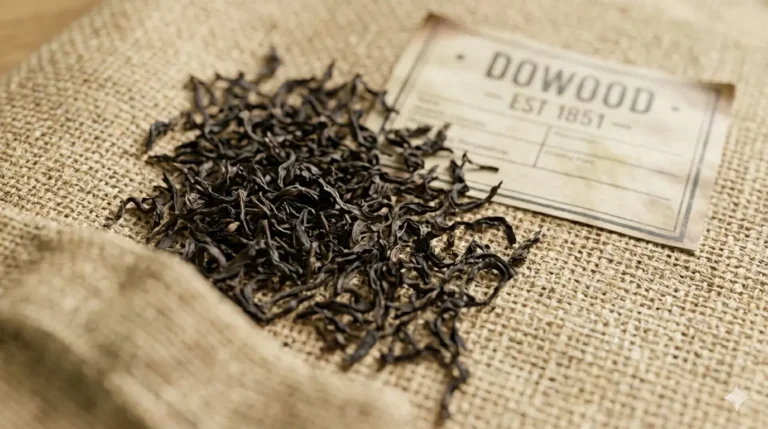
Fortune did not just collect thousands of seeds and seedlings — crucially, he also recruited experienced Chinese tea producers. He smuggled everything into India, then a British colony. On the slopes of the Himalayas, in Darjeeling and Assam, Chinese techniques were applied to local varieties of Camellia sinensis, giving rise to the vast Indian tea plantations. China’s monopoly was broken, and tea became a global commodity.
Tea Conquers the West: From the Aristocracy to the People
While Robert Fortune secured the supply, demand in the West was already firmly established. But how did an Eastern habit become a cornerstone of British culture? The answer involves a queen and a ritual of social connection.
Catherine of Braganza: The Portuguese princess who loved tea
When the Portuguese princess Catherine of Braganza married King Charles II of England in 1662, she brought in her dowry not only land (such as Bombay and Tangier), but a personal habit: drinking tea. At the Portuguese court, tea was already consumed as a medicinal and luxury drink. Catherine popularized tea among the English aristocracy, making it the height of sophistication.
“Afternoon Tea” as a ritual of connection and status
In the nineteenth century, the seventh Duchess of Bedford, Anna Maria Russell, created “Afternoon Tea” to combat the “sinking feeling” between lunch and dinner. What began as a private snack became a social event. Five o’clock tea turned into a ritual of connection, gossip, and status, gradually becoming more democratic as tea from India arrived in greater quantities and at lower prices, turning it into the daily micro-habit of the entire British population.

Cultural Adaptations: Tea Goes Global
Tea did not just travel — it adapted. Upon arriving in new corners of the world, Camellia sinensis encountered new waters, new spices, and new forms of hospitality.
- Mint Tea in the Maghreb: In Morocco and North Africa, Chinese green tea was combined with fresh mint and generous amounts of sugar, served in decorated glass cups as a sacred symbol of hospitality.
- Indian Chai: In India, strong black tea was boiled with milk, sugar, and a blend of spices (cardamom, cinnamon, ginger), creating Masala Chai — an energizing and comforting drink consumed on every street corner.

Conclusion: One Cup, a Thousand Cultures
Tea’s journey — from a closely guarded secret in the mountains of Yunnan to a drink enjoyed in every home on the planet — is a testament to the human pursuit of flavor, healing, and connection. When you hold your cup today, you are holding millennia of history, espionage, royal rituals, and cultural adaptations.
Tea is proof that a simple leaf has the power to unite the world, one sip at a time.
Sources and Inspirations
- Sarah Rose: Author of For All the Tea in China: How England Stole the World’s Favorite Drink and Changed History, the definitive work on Robert Fortune’s mission.
- Tom Standage: Author of A History of the World in 6 Glasses, a book that places tea among the six drinks that shaped the history of humanity.
- National Geographic History: Detailed documentation on maritime trade routes and the impact of the East India Company.
Continue your journey on the blog:
- The True Origin of Tea https://thehealthliving.com/the-true-origin-of-tea-between-ancient-legends-and-the-revelations-of-modern-archaeology/
- Who Discovered Tea? https://thehealthliving.com/who-discovered-tea-the-fascinating-journey-of-the-pioneers-who-revealed-the-secret-of-camellia-sinensis/
Is tea a part of your family’s culture? What’s your favorite style: the classic English tea, Indian chai, or our Brazilian mate? Let’s talk in the comments!
Transparency Note: This blog values originality and technology. The illustrations in this article were developed with the assistance of artificial intelligence to ensure a unique visual identity that is free of copyright restrictions.
