
ℹ️ Note: This article contains affiliate links. As an Amazon Associate, I earn from qualifying purchases at no extra cost to you.
What If the Problem Wasn’t the Thought — But the Invisible Loop?
You don’t notice exactly when it starts. It’s not a conscious decision to spend hours dissecting some throwaway comment from breakfast. It’s more like a subtle trap. One thought surfaces, and before you know it, your mind has built an entire skyscraper of worries, assumptions, and worst-case scenarios on top of it.
Do you feel like your mind never rests, even when your body is exhausted? Like you’re constantly replaying the past or previewing the future? What if this “overthinking” wasn’t a fixed personality trait, but an invisible loop of habits you learned to repeat? Understanding that mechanism is the first step to breaking it.
Useful Thinking vs. Overthinking: What’s the Difference?
Not every thought is a problem. Reflection and planning are essential parts of life. But there’s a crucial difference between thinking constructively and falling into the overthinking spiral.
- Useful Thinking: This is solution-focused. It weighs the facts, maps out practical steps, and ends with a decision or action. The situation gets processed and the mind moves on.
- Overthinking: This is the alarm that never shuts off. It’s rumination. The mind keeps cycling through the same problems without ever reaching a satisfying conclusion. It’s a persistent hum that quietly erodes your peace and mental clarity.

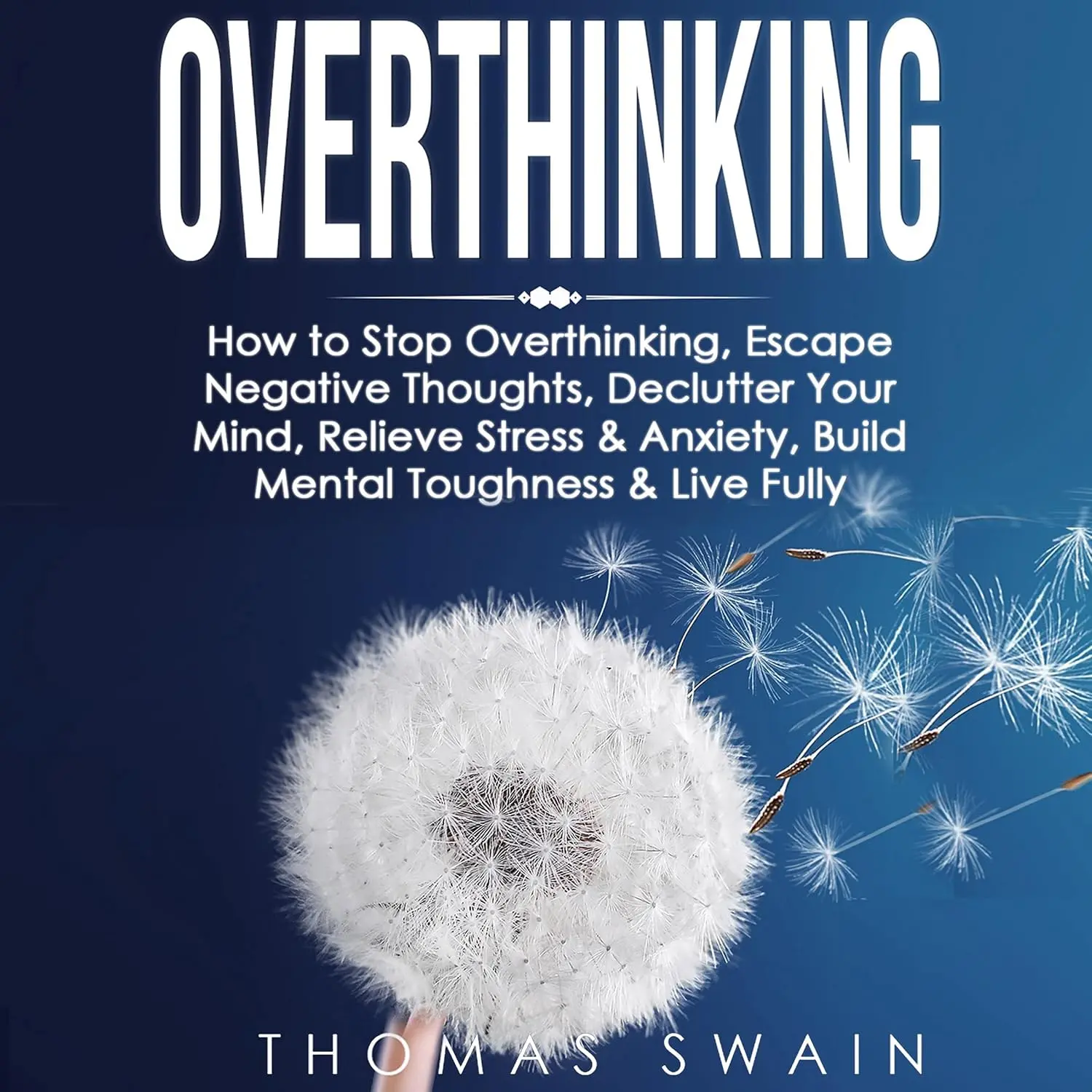
Why We Overthink: The Anatomy of the Loop
Overthinking doesn’t happen in a vacuum. It’s fueled by psychological mechanisms and the world we live in today.
The Search for Certainty The human brain hates uncertainty. When we face an ambiguous situation, the brain shifts into hyper-analysis mode, desperately trying to “predict” the outcome and avoid pain. The problem is that life is inherently uncertain — and attempting to control the future through sheer thinking only generates more anxiety.
The Cost of Perfectionism Today’s society glorifies performance and optimization. There’s an invisible pressure to always make the perfect decision, to never get it wrong. That underlying fear of failure — of not being “enough” — turns simple choices into existential dilemmas, creating the perfect conditions for analysis paralysis to take hold.
Micro-Habits That Break the Cycle Without the Fight
Stepping into a boxing ring against your own mind doesn’t work. Trying to force silence only creates more tension. The solution is to rewire the habit — by gently shifting where your mind is pointed.
The Sensory Anchoring Technique Sensory anchoring is the fastest way to pull your mind out of the past or future and bring it back to right now. Use the “5-4-3-2-1” rule for 5 minutes:
- Notice 5 things you can see. (The texture of the table, the color of the wall.)
- Notice 4 things you can touch. (The fabric against your skin, the chair beneath you.)
- Notice 3 things you can hear. (Traffic outside, the sound of your own breathing.)
- Notice 2 things you can smell. (The scent of coffee, your perfume.)
- Notice 1 thing you can taste. (The flavor of water, the taste of tea.)

The Presence
More than just a drink, the ritual of making and drinking tea can be a powerful circuit-breaker for overthinking. The process forces you to slow down and tune into tactile and aromatic sensations, interrupting the cycle of rumination.
- Recommended Teas: Lemon Balm (Melissa) and Passionflower are excellent choices for calming the nervous system without causing excessive drowsiness.

Conclusion and Next Steps
Overthinking can feel like a prison with no bars — but it isn’t. When you understand that it’s often a learned pattern, driven by our need for control and perfection, you gain the power to change it. Don’t try to silence your mind by force; simply redirect it with kindness. Start today with just one of these presence-based micro-habits. Today’s small win lays the groundwork for tomorrow’s clarity.
Further Reading
- Why Are You Always Tired? https://thehealthliving.com/why-are-you-always-tired-the-truth-about-mental-fatigue-and-how-to-get-your-energy-back/
- Constant Anxiety https://thehealthliving.com/constant-anxiety-whats-behind-the-silent-rise-and-how-to-break-the-cycle-in-5-minutes/
Sources and Inspiration
- Jon Kabat-Zinn — His pioneering research on Mindfulness-Based Stress Reduction (MBSR) was a key foundation for understanding active acceptance as a response to intrusive thoughts.
- S. G. Hofmann — Data and definitions on the psychology of anxiety and worry cycles drawn from his published work on Cognitive Behavioral Therapy (CBT).
- Harvard Health Publishing — Articles on breathing and relaxation techniques for calming the nervous system, used to support the practical tips.
Do you recognize that “mental hum” in yourself? Which of these techniques will you try first? Share in the comments below — let’s talk about freeing our minds together!
Transparency Note: This blog values originality and technology. The illustrations in this article were developed with the assistance of artificial intelligence to ensure a unique visual identity that is free of copyright restrictions.
