
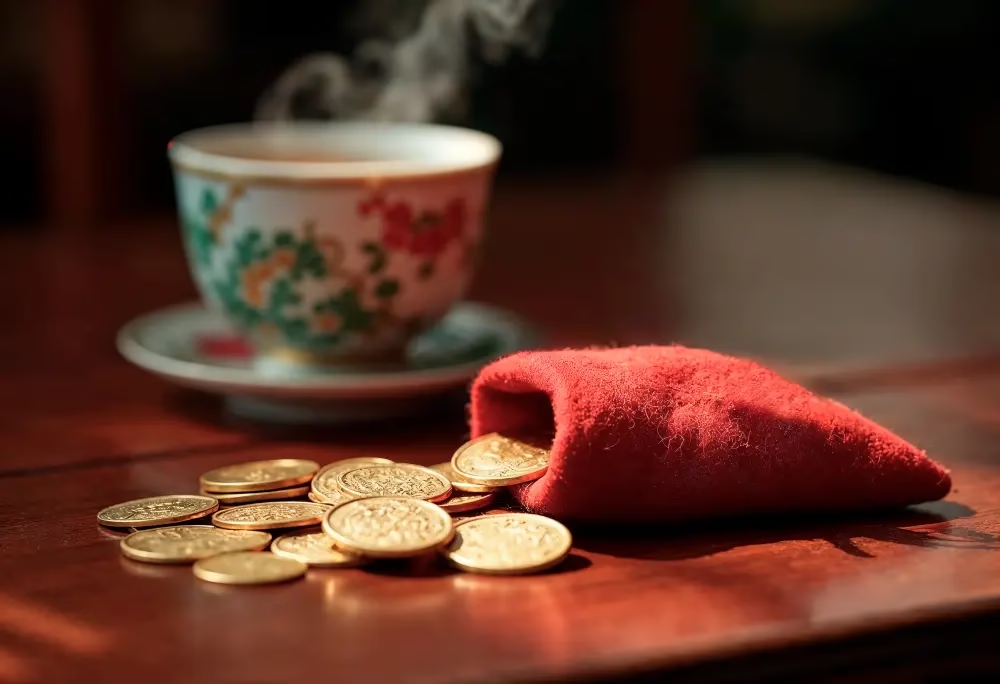
You’ve probably heard that gold was the most valuable currency in history.
But what if I told you that, for centuries, a simple handful of dried leaves was worth more than silver coins in many parts of the world?
Yup. We’re talking about tea. And its history is way wilder than it looks.
How Tea Became Actual Money
In ancient China, transporting fresh leaves was a nightmare. They spoiled fast.
The solution? Compress the tea into solid bricks. These blocks were light, durable, and everyone wanted them. They were the perfect “hard currency.”
In 17th-century Russia, these bricks arrived after months of traveling the Silk Road. They were literally worth their weight in gold. In Siberia and Mongolia, you’d pay your taxes, buy horses, and even settle dowries using tea bricks.
No exaggeration: it was the hundred-dollar bill of the era.
The “Banknote” You Could Drink
These bricks had another cool feature: you could use a little bit at a time.
Need change? You’d just break off a corner of the brick. It was like a fractional banknote, only edible.
And when it got too old to be used as money? You just brewed it. Zero waste.
The War That Started Over a Cup
Now comes the part that sounds like a movie script.
In 1773, American colonists were furious over the British tax on tea. Their solution? They dumped 342 chests of the stuff into the Boston Harbor.
This became the world-famous Boston Tea Party. And it was one of the sparks that ignited the American Revolution.
Yes—the United States exists, in part, because of a massive fight over tea taxes.
China Entered the Chat, Too
England was obsessed with Chinese tea. But China didn’t really want to buy anything from the British.
To balance the trade books, England started selling opium in China. Addiction skyrocketed. China banned it. The British didn’t take “no” for an answer.
The result? The Opium Wars—two devastating 19th-century conflicts that reshaped Asia. It all started with a dried leaf in a cup.
The Spy Who Stole the World’s Most Valuable Secret
For centuries, only China knew how to make real tea. It was a state secret.
In 1848, the British East India Company sent a botanist named Robert Fortune to China on a Mission Impossible: steal the plants and the cultivation secrets.
Fortune disguised himself as a Chinese merchant, infiltrated forbidden regions, and escaped with saplings, seeds, and expert workers. This transformed India into the world’s top tea producer.
The British tea we know today was basically born from a heist.
Tea Is Still Power—It Just Changed Shape
Today, tea isn’t used as currency anymore. But it still moves billions.
It’s the second most consumed beverage in the world, trailing only water. The global tea market is worth over $200 billion a year.
That cup you brew in the morning carries centuries of trade, conflict, and culture.
So, the Next Time You Make Tea…
Take a second before that first sip.
Think about how those leaves were once money, caused wars, and crossed continents hidden in a spy’s clothes.
Tea is small. Its history is massive.
☕ Love these facts?
Share this with that friend who loves a good cup of tea—they’ll love knowing they’re holding a piece of history.
👇 Drop a comment: Which of these stories surprised you the most?
