
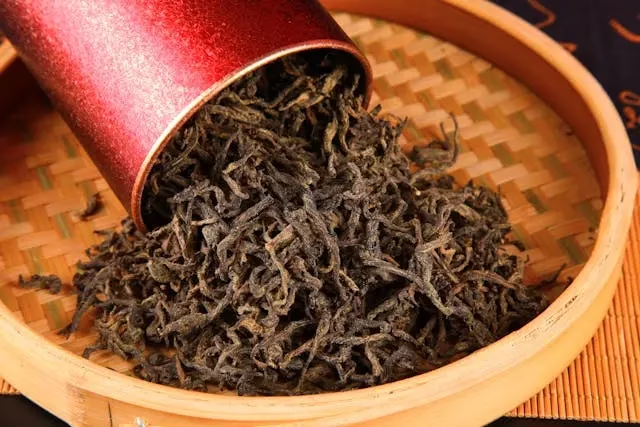
Have you ever heard of a tea that gets better with time, just like a fine wine? That’s Pu-erh tea, one of the jewels of Chinese culture that is winning over enthusiasts all over the world. With more than a thousand years of history, it is known for its deep flavor, unique fermentation process, and potential health benefits, such as supporting digestion and aiding metabolism.
In this article, you’ll learn about its origin, types, flavors, benefits, and how to choose the ideal Pu-erh for your daily routine.
What Makes Pu-erh Tea So Special?
Unlike any other tea, Pu-erh undergoes a controlled microbial fermentation process, which creates aromas and flavors that transform over time. Originally from Yunnan, China, it is made from the leaves of old Camellia sinensis var. assamica trees, some of which are more than 500 years old.
While other teas lose quality over time, Pu-erh gets better with age, developing complex, smooth, and earthy notes.
The History of Pu-erh Tea: From the Tea Horse Road to Global Popularity
- Ancient Origins: It has been consumed since the Song dynasty (10th century).
- The Tea Horse Road: During its transport to Tibet, the tea naturally fermented, gaining new characteristics.
- Highs and Lows: It held great prestige during the Yuan and Ming dynasties, almost disappearing later on until it was rediscovered in the 20th century.
- Modern Revival: Today, it is one of the most highly valued teas, with traditional versions and modern fermentation techniques.
Types of Pu-erh: Sheng and Shou
Sheng Pu-erh (Raw or Green)
- Made with a traditional process, where young leaves are withered, fixed, rolled, and sun-dried.
- It can be consumed young, with a vegetal and astringent flavor, or aged, when it gains smoothness and complexity.
Shou Pu-erh (Ripe)
- Created in 1972, it undergoes an accelerated fermentation called Wo Dui, which reproduces the aging effect in months.
- It has earthy flavors, notes of chocolate and coffee, and a full-bodied, velvety texture.
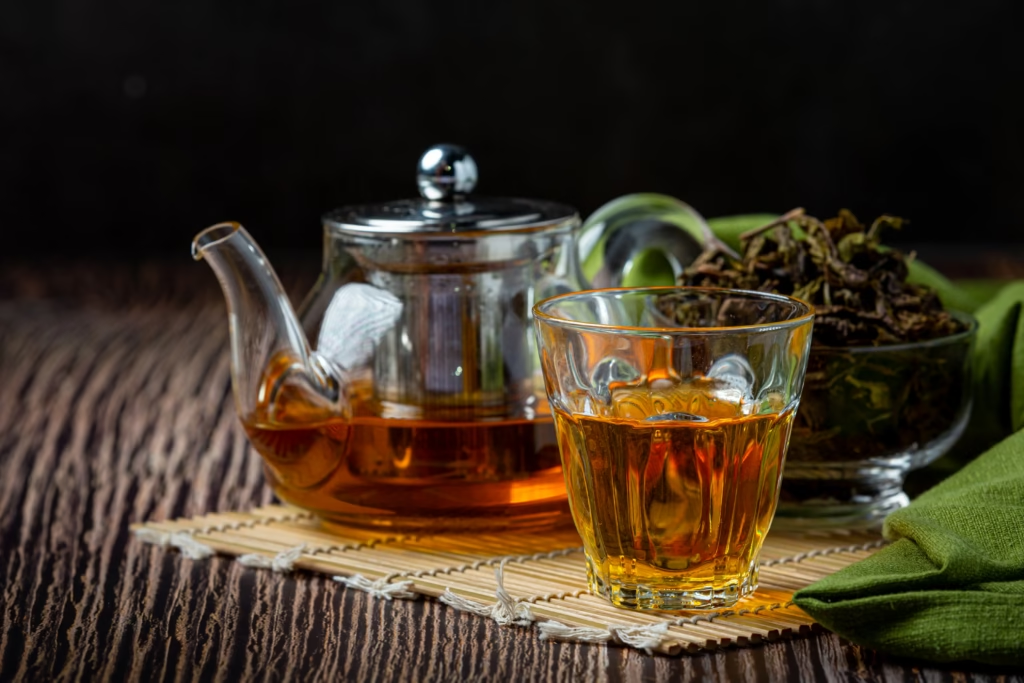
Flavors and Sensory Experience
- Young Sheng: Features fresh, vegetal, and astringent notes.
- Aged Sheng (10+ years): Has woody, fruity, and spicy flavors.
- Shou (Ripe): Presents notes of damp earth, cocoa, and coffee, with a natural sweetness.
Pu-erh can be found in traditional pressed formats such as cakes (bingcha), bricks (zhuancha), and nests (tuocha), which were originally created to make transport easier.
The Health Benefits of Pu-erh Tea
Scientific studies and Chinese tradition highlight benefits that make Pu-erh even more special:
- Rich in Antioxidants: Helps fight free radicals.
- Supports Digestion: May benefit gut flora thanks to its natural microorganisms.
- Fat Metabolism: Research suggests a positive impact on lipid metabolism.
- Glycemic Control: Compounds may help regulate blood sugar.
- Weight Management Aid: Not a magic solution, but it can replace high-calorie beverages and contribute to healthy habits.
How to Choose and Store Your Pu-erh
Identifying Quality
- Look for whole leaves with no mold.
- The aroma should be clean and pleasant.
- Choose a reliable source, preferably from Yunnan.
Ideal Storage
- Store in a cool, humid (60-70%), well-ventilated place away from strong odors.
- It can be stored for years, developing new flavors.
How to Prepare Pu-erh Tea
- Initial Rinse: “Wake up” the leaves with hot water and discard this first infusion.
- Short Infusions: Start with 20-30 seconds, gradually increasing the time.
- Enjoy Multiple Infusions: A good Pu-erh can be re-brewed up to 10 times.
Use traditional vessels like a gaiwan or a Yixing teapot to intensify the experience.
The Future of Pu-erh
Increasingly appreciated in the West, Pu-erh is gaining prominence with sustainable practices, organic certifications, and innovative production that keeps the tradition alive. More than just a beverage, Pu-erh is a cultural ritual, a bridge between the past and present that continues to win over new enthusiasts worldwide.
Conclusion: An Experience That Goes Beyond Tea
Pu-erh is not just a tea; it’s a journey of flavors and discoveries. Whether in its Sheng version, which is fresher and more challenging, or Shou, which is full-bodied and smooth, each sip carries centuries of tradition and an invitation to explore new aromas and benefits.
👉 Ready to start your journey into the world of Pu-erh today? Try different versions, share your experience, and discover which one captures your palate.
Before trying any tips from this post—such as exercises or herbal teas—be sure to consult a doctor, nutritionist, or qualified health professional. Your body is unique, and taking the right precautions is the first step to a healthy life.
