
TEA CULTURE · GLOBAL TRENDS
From Japanese ceremonies to American glasses filled with ice — why does the same leaf create such different experiences?
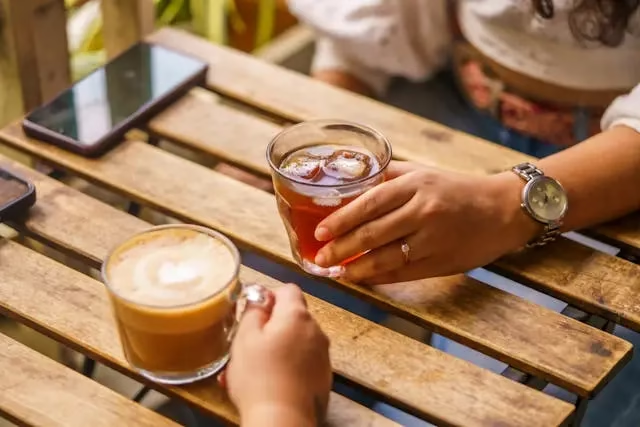
Have you ever stopped to think that the exact same tea leaf can become a sacred ritual in Japan and a huge glass full of ice in the United States? It might seem like a small detail, but it says a lot about culture, climate, and even lifestyles.
Tea is the second most consumed drink in the world — losing only to water. But the way each culture drinks this infusion is completely different. And that is exactly what makes it so fascinating.
Why Does the Same Tea Create Such Different Experiences?
There isn’t just one simple answer. Climate helps explain it — hotter countries tend to prefer iced tea. But that’s not all. Culture, history, and even economics shape how different people relate to this drink.
A classic example: England has a gray and cold climate, yet hot black tea became a national symbol long before refrigerators even existed. The big secret is that tea is a “cultural object.” It carries each culture’s way of seeing a break, a meeting, and self-care.
“Tea isn’t just a drink. It’s a meaningful break — and every culture defines that meaning in its own way.”
How the World Drinks Tea: A Trip Through 6 Cultures
Let’s take a trip around the planet and see how this little leaf shows up in the daily lives of different countries.
- 🇨🇳 China: Where It All Began
The birthplace of tea, China treats the drink as art. The Gongfu Cha is a ceremony that can last for hours. Green and white teas are the favorites — always hot, always without sugar.
- 🇯🇵 Japan: Silence in Liquid Form
Matcha isn’t just an Instagram trend. In Japan, it has existed for centuries within a ceremony called Chanoyu — meditation, aesthetics, and presence in a bowl of green powder.
- 🇬🇧 England: Afternoon Tea as Law
Afternoon tea is still taken very seriously. Black tea with milk, a biscuit on the side, and a dose of formality — pure British identity.
- 🇺🇸 USA: Ice, Lemon, and Sugar
American iced tea is a different story. Especially in the South, “sweet tea” is almost a religion. A giant glass, lots of ice, and lots of sugar.
- 🇮🇳 India: The Chai That Hugs You
Indian masala chai is black tea boiled with milk, ginger, cardamom, and spices. Sold on the streets by chaiwalas — it’s comfort in the form of a drink.
- 🇧🇷 Brazil: From Mate to Tererê
The chimarrão from the South and the tererê from Mato Grosso do Sul show that tea can be a social thing. The gourd is passed from hand to hand — it’s a ritual of belonging.
Iced Tea Is Taking Over — and the Numbers Prove It
In recent years, the iced tea market has grown impressively. Especially among younger people, who are looking for alternatives to soda.
- 2nd most consumed drink in the world.
- +7% annual growth for iced tea.
- 6 billion cups of tea drunk every day.
Taiwanese bubble tea, for example, became a global craze — today, there are lines in São Paulo, Paris, and New York. It’s tea, but with tapioca pearls and lots of ice. Quite a leap from a Japanese ceremony, right? This shows that tea is “alive.” It adapts. It talks to every generation and every context without losing its essence.
Hot or Iced — Which Is Healthier?
If you drink hot tea every day, what happens?
The hot version preserves antioxidants better, especially in green and white teas. Heat helps extract active compounds — but there is one detail: drinking tea above 149°F (65°C) regularly can irritate the esophagus over the long term. The general advice is to let the tea cool down a bit before drinking. That impulsive first sip might not be great for you.
Does iced tea lose its benefits?
It depends on how it was made. “Cold brew” tea — a slow infusion method in cold water — preserves antioxidants very well and even reduces bitterness. The problem is store-bought bottled iced teas. Many have so much sugar that any benefit from the tea is literally drowned in calories.
The tip is simple: make it at home. Whether hot or iced, the tea you prepare yourself will always be better than any bottled version.
What Your Tea Choice Says About You?
There’s no right answer here — but it’s a fun question to think about.
People who prefer hot tea tend to like rituals and intentional breaks. There is something meditative about waiting for the water to boil, choosing the tea, and feeling the warmth in your hands.
People who go for iced tea are often looking for convenience and freshness. It’s the drink that fits in a bottle, goes to the gym, and cools you down on a hot afternoon.
And maybe you are both — depending on the day, the season, or your mood. That’s tea. It adapts to you.
How to Try New Tea Styles at Home
- Start with the basics: Green tea cold brew
Put 1 teaspoon of green tea in 16 oz (500ml) of cold water. Leave it in the fridge for 8 hours. Strain and drink. Simple, tasty, and full of benefits.
- Try Indian chai
Boil milk with water, black tea, grated ginger, cardamom, and a pinch of cinnamon. Sweeten with honey if you like. It’s warm, aromatic, and feels like a hug from the inside.
- Explore iced matcha
Dissolve 1 teaspoon of matcha powder in hot (not boiling) water. Pour over ice. Add plant-based milk if you want. Your “Instagrammable” drink is ready — but with much more culture behind it.
Tea Is Culture, Not a Fad
We live in a time where everything becomes a trend and then disappears. Tea has survived for millennia. It went through empires, wars, industrial revolutions, and the rise of social media. And it’s still here — hot or iced, in a traditional gourd or a giant cup with a straw.
What changes is how we drink it. What doesn’t change is that today, someone, somewhere in the world, is going to stop everything for a few minutes because of a cup of tea. That is too beautiful to ignore.
What is your favorite tea?
Tell us in the comments — hot, iced, with sugar, without, in a gourd, or in a glass. Every answer is a small window into your culture.
