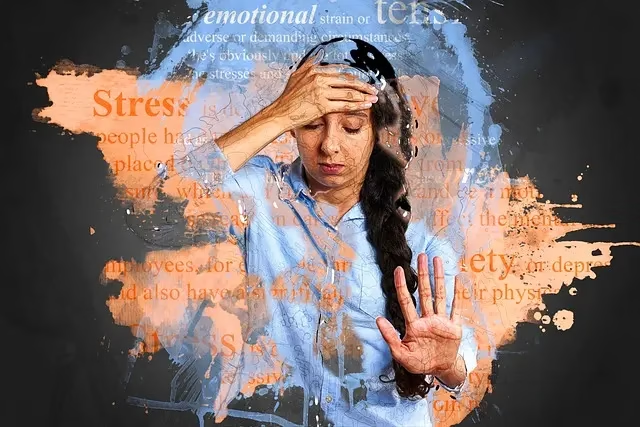
Have you ever caught yourself saying you’re “anxious” when you’re actually just “stressed”? Or confused the two feelings as if they were the same? This confusion is more common than it seems—after all, both anxiety and stress can cause very similar physical and emotional symptoms.
But understanding the difference between them is an essential step to regaining your emotional balance and adopting truly effective strategies for each situation.
In this practical guide, you will learn:
- How to recognize the signs of anxiety and stress
- What their main differences are
- Effective strategies for dealing with each
- When it’s time to seek professional help
Get ready to take the first step toward a lighter, more balanced life.
What is Anxiety?
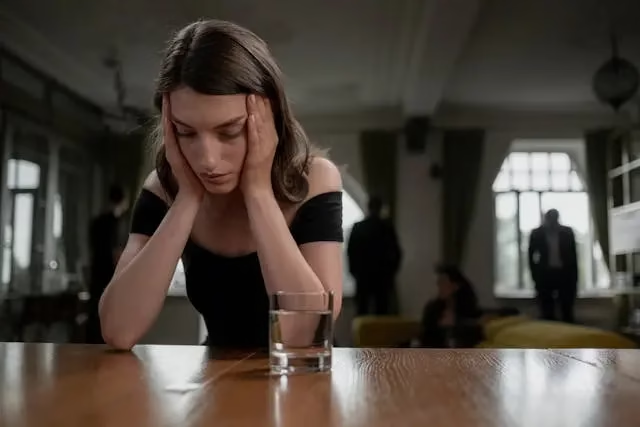
Anxiety functions as an internal alarm—a natural response from our brain to protect us from potential threats. However, in some people, this alarm never turns off, leading to excessive worries, tension, and a constant feeling that something will go wrong.
Main Symptoms of Anxiety
- Physical: rapid breathing, heart palpitations, tremors, excessive sweating, insomnia, and muscle tension.
- Emotional and cognitive: repetitive worries, catastrophic thoughts, difficulty concentrating, irritability, and a feeling of being constantly “on edge.”
Types of Anxiety
- Trait Anxiety: Part of a person’s personality, who tends to be naturally more vigilant.
- State Anxiety: Arises in specific situations, such as before a job interview or presentation.
What is Stress?
Stress, unlike anxiety, always has an external trigger—a tight deadline, chaotic traffic, work problems, or family conflicts. In small doses, it can even be useful, increasing focus and productivity.
The problem is when stress becomes chronic, leaving the body and mind in a constant state of alert.
Symptoms of Stress
- Physical: fatigue, headaches, digestive problems, appetite changes, low immunity.
- Emotional and behavioral: irritability, procrastination, difficulty concentrating, social isolation, or excessive use of alcohol and food to relieve pressure.
Burnout: When Stress Goes Over the Limit
If chronic stress is not treated, it can evolve into burnout, characterized by deep emotional exhaustion, demotivation, feelings of incompetence, and cynicism toward work and life.
Differences Between Anxiety and Stress
Aspect | Stress | Anxiety |
Origin | Identifiable external pressures | Internal, imaginary worries |
Duration | Temporary, linked to specific situations | Can be constant, even without an apparent reason |
Temporal Focus | Present: “I have too much to handle right now” | Future: “What if something goes wrong?” |
Predominant Feeling | Overload and pressure | Fear and insecurity |
Energy | Feeling of being drained | Feeling of being wired, on alert |
How to Manage Anxiety
- Breathing Techniques
- 4-7-8 Breathing: Inhale for 4 seconds, hold for 7, exhale for 8.
- Diaphragmatic breathing: Breathe using your abdomen, not your chest.
- Cognitive Restructuring
- Ask yourself: “Is this worry real or just an exaggerated fear?”
- Grounding 5-4-3-2-1
- Identify 5 things you see, 4 you can touch, 3 you can hear, 2 you can smell, and 1 you can taste.
- Physical Exercise
- Walks, yoga, pilates, or swimming help reduce tension.
- Anti-Anxiety Diet
- Include fish, foods rich in magnesium, and calming teas. Avoid caffeine and highly processed foods.
How to Reduce Stress
- Eisenhower Matrix (prioritize what’s urgent and important).
- Pomodoro Technique (25 min of focus + short breaks).
- Learn to Say No—setting boundaries is essential.
- Progressive Muscle Relaxation—tense and relax muscles in sequence.
- Decompression Rituals—a warm bath, reading, daily gratitude, or time in nature.
When to Seek Professional Help
⚠️ Seek specialized support if:
- Anxiety or stress interferes with your sleep, relationships, or productivity.
- You have persistent physical symptoms.
- You rely on alcohol, food, or medication to cope with emotions.
- There is a feeling of hopelessness or frequent negative thoughts.
Common Treatments:
- Cognitive-Behavioral Therapy (CBT): Helps change thought patterns.
- Acceptance and Commitment Therapy (ACT): Teaches how to live with difficult emotions.
- Mindfulness and meditation: Proven to be effective in reducing stress.
- Psychiatric support: In more severe cases, may include medication.
Habits That Protect Your Mental Health
- Self-care routine: meditation, stretching, balanced diet.
- Emotional resilience: cultivate good relationships and enjoyable hobbies.
- Continuous education: read, learn about emotional intelligence, and practice self-awareness.
- Use technology for good: apps like Headspace, Calm, or Forest can help.
Common Myths About Anxiety and Stress
- ❌ “Anxiety is an overreaction” → ✔ It’s a real condition with a biological basis.
- ❌ “Stress is always bad” → ✔ In moderate doses, it can improve performance.
- ❌ “Anxiety meds are addictive” → ✔ When prescribed correctly, they are not addictive.
- ❌ “Successful people don’t suffer from this” → ✔ Everyone is susceptible.
Conclusion: Your Path to Mental Peace
Anxiety and stress are part of life, but they don’t have to control you. The key is to recognize the differences, apply practical strategies, and seek support when needed.
Your mental health is an investment. Start today by choosing a simple technique from this article—whether it’s a deep breath, a walk outside, or a gratitude ritual before bed.
Before trying any tips from this post—such as exercises or herbal teas—be sure to consult a doctor, nutritionist, or qualified health professional. Your body is unique, and taking the right precautions is the first step to a healthy life.
