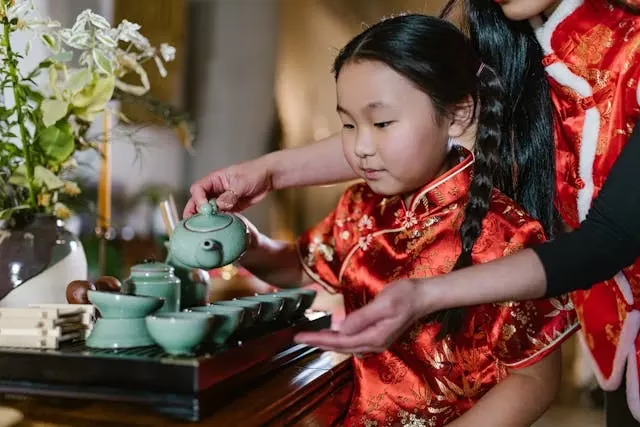
Have you ever stopped to think that the cup of tea in your hand carries over five thousand years of history?
No joke. Tea has outlasted empires, crossed oceans, sparked wars, and literally changed how the world does business. It all started with a single leaf falling into a bowl of hot water.
Stick with me—I’m about to tell you the story. I promise you’ll never look at your mug the same way again.
It Started with a Forgotten Leaf in Hot Water
Official history places tea in China around 2737 B.C. Emperor Shen Nung was boiling some water when leaves from a nearby tree drifted into his bowl.
He tasted it. He loved it. And the world was never the same.
Sure, that’s the legend. But it makes sense, right? Tea has always been like that: simple, almost accidental, yet impossible to ignore.
Why Did China Keep the Secret for So Long?
For centuries, China treated tea like a national treasure. They exported the brew, but never the plants or the processing secrets.
It was pure power. Whoever controlled the tea, controlled the trade. Simple as that.
The Tea Route: When Tea Became Currency
By the 7th century, tea was traveling the Silk Road. Traders swapped “tea bricks” for horses, silk, and spices.
Can you believe tea was literally cash? In parts of Central Asia, it was used as actual currency. You could pay for your lunch with a piece of pressed tea.
Japan got its first taste from Buddhist monks in the 9th century, turning tea-drinking into an entire life philosophy—the famous Chado, or “Way of Tea.”
Britain Stole the Recipe—and Almost Went to War Over It
This is where the story gets juicy.
In the 17th century, tea hit Europe and became a British obsession. The problem? Britain was paying a fortune to China, and China only accepted silver.
The British East India Company had a “brilliant”—and morally questionable—idea: use opium to balance the trade. The result? The Opium Wars. Yes, all over tea.
But the real game-changer happened in 1848. A British botanist named Robert Fortune went to China undercover, stole tea plants, and smuggled them to India. That’s how the Darjeeling and Assam tea industries were born.
Botanical espionage. Sounds like a movie, but it’s 100% real.
Tea Hits Brazil—and Why We Almost Ignored It
Believe it or not, Brazil has its own tea history. The first seedlings arrived around 1812, brought from China to Rio de Janeiro at the request of King John VI.
But Brazil is coffee country. Tea never quite found its footing here—until Japanese immigrants arrived in the early 20th century, bringing green tea culture into daily life.
Today, the Ribeira Valley in São Paulo produces real tea (from the Camellia sinensis plant) and exports it worldwide. Bet you didn’t know that!
Tea Today: Back at the Center of the World
Tea is the second most consumed beverage on the planet, trailing only water. We’re talking over three billion cups a day.
And the trend is growing. A generation looking for wellness, meaningful rituals, and less heavy caffeine is rediscovering tea—this time with bamboo whisks, iron pots, and all the ceremony.
From a leaf falling into a Chinese emperor’s water to your cup today, this story has traveled through wars, oceans, and continents.
It’s not just a drink. It never was.
☕ Which tea represents you? Let us know in the comments—and share this post with that one friend who drinks tea every day without knowing its wild historyLorem ipsum dolor sit amet, consectetur adipiscing elit. Ut elit tellus, luctus nec ullamcorper mattis, pulvinar dapibus leo.
