
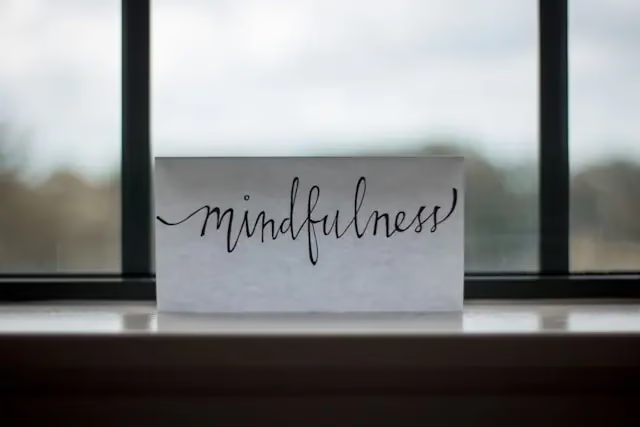
The accelerated pace of the modern world causes many people to live on “autopilot,” reacting to external and internal stimuli without realizing what they are truly feeling or thinking. It is in this context that mindfulness, or full attention, gains ground as one of the most effective practices for developing emotional balance, reducing stress, and increasing awareness of the present.
Although the term has gained popularity in recent years, mindfulness originated in ancient meditative traditions, especially Buddhism. Today, the practice is fully integrated into secular contexts and supported by scientific research that proves its benefits for physical, mental, and emotional health.
If you want to understand how mindfulness works, what it is for, and how to start practicing it in your daily life, this complete guide was created for you.
What is Mindfulness?
Mindfulness means paying attention to the present moment in an intentional, curious, and non-judgmental way. It is the opposite of living automatically, trapped in the past or anxious about the future.
The practice can be developed through formal exercises—such as meditation, conscious breathing, body scans, and visualizations—or through informal activities incorporated into daily life, such as eating, walking, or taking a shower with full attention.
Sciences such as psychology, neuroscience, and psychiatry indicate that mindful attention strengthens areas of the brain related to emotional regulation, memory, concentration, and resilience.
What is Mindfulness For?
The regular practice of mindfulness serves to develop greater internal awareness and foster a more balanced relationship with thoughts, emotions, and physical sensations. The main benefits include:
- Reduction of Stress, Anxiety, and Depression
Mindfulness decreases the activation of the stress axis and helps the brain process emotions with greater clarity. Therefore, the practice is frequently recommended for people experiencing emotional overload or anxiety conditions.
- Improved Concentration and Focus
By training the mind to be present, mindfulness increases the ability to maintain attention on a task and reduces distractions, which is especially useful for those working in dynamic environments or facing an excess of digital stimuli.
- Emotional Balance
Mindful attention allows you to identify emotions the moment they arise, leading to more conscious and less impulsive responses.
- Increased Feeling of Calm and Well-Being
With practice, the nervous system activates states of relaxation, improving mood and reducing physical tension from daily life.
- Better Sleep
A calmer mind tends to fall asleep more easily and experience better quality sleep.
- Reduction of Compulsive Eating and Emotional Eating
Mindfulness helps you notice signs of hunger, satiety, and emotional triggers that lead to excessive food intake.
- Decrease in Persistent Pain
The practice increases body awareness and aids in pain management, being used as a complement in the treatment of chronic illnesses.
- Greater Self-Knowledge
By observing repetitive thoughts and behaviors, the person begins to better understand their reactions and emotional patterns, strengthening self-esteem.

How to Practice Mindfulness: 6 Simple and Effective Ways
Mindfulness does not require accessories, special clothing, or long periods of practice. Just a few minutes a day is enough to start noticing differences in mental clarity and overall well-being.
Below, discover practical and accessible ways to include full attention in your routine.
- Mindfulness in Daily Activities
One of the most effective—and often underestimated—ways to develop mindful attention is to apply it to routine tasks. This means transforming simple activities into opportunities to be present.
You can practice mindfulness while:
- Washing dishes;
- Taking a shower;
- Brushing your teeth;
- Cooking;
- Cleaning the house;
- Driving;
- Walking down the street.
How to do it:
When performing the task, bring your attention to the details:
– the temperature of the water,
– the smells,
– the texture of the objects,
– the movements of the body,
– the sounds around you.
Whenever your mind gets lost in thought, simply notice it and return to the present moment—without judgment.
Why it works:
Informal practices develop focus, reduce anxiety, and strengthen mental presence in small moments, which make up most of life.
- Movement Mindfulness
Movement Mindfulness consists of consciously noticing every gesture made by the body. This can be applied to dancing, stretching, walking, physical exercise, or even natural movements of daily life.
Simple example:
During a walk, observe:
- The contact of your feet with the ground,
- The rhythm of your breathing,
- The natural swing of your arms,
- The temperature of the air,
- Your body posture.
If you want to go deeper, try walking more slowly for a few minutes to expand body perception.
Who it is ideal for:
– restless people,
– those who find it difficult to sit still during meditations,
– beginners who prefer dynamic practices.
- Body Scan: Deep Body Awareness
The Body Scan is one of the most complete and relaxing mindfulness practices. It guides the mind to observe every part of the body, promoting physical and emotional relaxation.
How to practice:
- Lie on your back in a comfortable place.
- Close your eyes and breathe deeply.
- Notice the contact of your body with the floor or mattress.
- Direct your attention to your left foot and observe sensations, temperature, and tension.
- Slowly move up the body: ankle, leg, knee, thigh…
- Continue until you reach the head.
- Repeat the process on the right side.
- Finish by feeling the entire body as an integrated whole.
Benefits of the Body Scan:
– reduces muscle tension;
– improves body awareness;
– helps people with persistent pain;
– promotes a deep state of relaxation.
- Mindfulness in Breathing
Breathing is one of the most potent anchors for the present, because it is always available and changes according to the emotional state. By observing the breath, you naturally regulate the mind.
Step-by-step:
- Sit or lie down comfortably.
- Close your eyes or keep your gaze soft.
- Observe the air entering and leaving without trying to change the rhythm.
- Note the expansion of the abdomen, the movement of the chest, or the air passing through the nostrils.
- When thoughts arise—and they will arise—just acknowledge them and return to the breath.
Recommended time:
Start with 3–5 minutes and increase to 10–20 minutes as you feel comfortable.
Why this technique is powerful:
It improves emotional regulation and helps during moments of anxiety, tension, or stress.
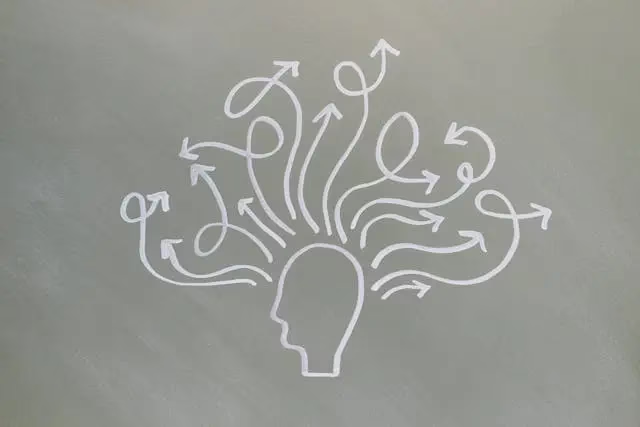
- Mindfulness with Guided Visualizations
Guided visualizations are practices where the person imagines tranquil scenarios, such as a silent beach, a forest, or a garden.
How it works:
– You focus on the colors, sounds, smells, and sensations.
– The mind relaxes by constructing positive mental images.
– Attention becomes fixed on the present through imagined sensations.
You can do visualizations alone or with the help of a guide, audio, or meditation app.
Indications:
– insomnia,
– anxiety,
– stress,
– emotional recovery after intense days.
- Mindfulness for Children
Children can also benefit from full attention, especially those with:
- ADHD,
- Anxiety,
- Concentration difficulties,
- Emotional regulation challenges.
The practice can include:
- Perception games,
- Conscious breathing,
- Imagination exercises,
- Observation of sensations,
- Playful practices with objects, colors, and sounds.
In addition to improving focus, mindfulness helps children better deal with frustrations and intense emotions.
How Long to Practice?
One of the most interesting aspects of mindfulness is that even short sessions—from 1 to 5 minutes—already bring benefits, as long as they are done regularly. Over time, you can progress to sessions of 10 to 20 minutes per day.
The key is consistency, not intensity.
Tips to Get Started Today
- Choose a fixed time to practice.
- Start with short exercises.
- Don’t criticize yourself if your mind wanders—that is natural.
- Use guided apps or audios to make it easier.
- Prioritize a quiet environment in the first few days.
- Maintain curiosity about your internal experiences.
Conclusion: Mindfulness is a Training for Life
Mindfulness is not just a meditative practice—it is a way of living more consciously, presently, and balanced. By developing full attention in your daily life, you reduce stress, improve focus, increase well-being, and move closer to a calmer and more meaningful life.
With simple and accessible exercises, anyone can begin this journey and reap profound short- and long-term benefits.
If you are looking for more serenity, mental clarity, and emotional balance, mindfulness is a transformative path—and you can start right now.
