
Longjing tea—also known as Dragon Well Tea—is considered one of the most precious gems of Chinese culture. Over centuries, it has captivated emperors, inspired legends, and become a symbol of elegance, tradition, and refinement. Produced in the West Lake region of Hangzhou, it is more than just a simple beverage: it is a cultural heritage deeply linked to China’s history, spirituality, and the ancient tea ritual.
In this article, you will learn the true story behind Longjing, its legendary origins, the exclusive details of its cultivation, why it is so highly valued, and how this tea became a global benchmark for quality, flavor, and tradition.
The Legend That Gave Rise to the Dragon Well: Between Myth and Tradition
The history of Longjing tea begins with a legend passed down through generations. It is said that many centuries ago, a small village in China faced a devastating drought. Crops withered, and the population suffered from a lack of water. Desperate, the residents were advised to pray to a benevolent dragon that, according to local stories, lived in a nearby well.
The Provident Rain
The village people followed the advice and offered their pleas. Miraculously, the rains returned, saving the crops and the lives of everyone. As a sign of gratitude, the village was renamed Longjing, which means “Dragon Well.”
This story, transmitted from generation to generation, not only baptized the location but also immortalized the tea that would be cultivated there, recognized for its purity, unique flavor, and spiritual energy associated with the figure of the dragon—a symbol of protection and prosperity in Chinese culture.
The First Historical References to Longjing
Although the legend is ancient, documented records of Longjing cultivation date back to the Tang Dynasty (618–907). At that time, tea consumption was already part of Chinese cultural life, and records show that the beverage was especially appreciated by monks, poets, and scholars.
The Advancement During the Song and Yuan Dynasties
During the subsequent dynasties, especially Song and Yuan, the tea gained even more notoriety. The mountainous region around the West Lake was considered ideal for the production of high-quality teas, and Longjing began to be consumed as a prestigious beverage within the Chinese aristocracy.
The Encounter with Emperor Qianlong: The Tea That Conquered the Imperial Court
Longjing reached its true peak during the Qing Dynasty (1644–1912), thanks to Emperor Qianlong, one of the most cultured and long-reigning rulers in Chinese history.
The Day Longjing Became Imperial
On one of his leisure trips, Qianlong visited the Hu Gong Temple, located near Shi Feng Mountain in the West Lake region. There, he was presented with a cup of freshly brewed Longjing.
Charmed by the tea’s smooth flavor, freshness, and distinctive aroma, the emperor decided to declare the 18 tea bushes growing in front of the temple as Imperial Tea Trees. This designation elevated Longjing’s status to a level never before achieved by any other tea of the era.
The Story of the Empress Dowager
Another equally famous version recounts that during a visit to the region, the emperor picked Longjing leaves with his own hands. However, in the middle of the harvest, he received news that his mother, the Empress Dowager, had fallen ill.
In a rush to return to court, he placed the fresh leaves inside his robe. Upon arrival, the Empress noticed the perfume of the leaves and asked for an infusion to be prepared. Upon tasting the tea, she felt rejuvenated—and thus, by imperial decree, Longjing received the title of “Tribute Tea.”
Since then, Longjing has been considered a noble and highly coveted tea.
The Perfect Environment: Where True Longjing Is Born
True Longjing is cultivated exclusively in the West Lake region of Hangzhou, Zhejiang province, eastern China.
Climate and Geography That Shape the Flavor
This area is globally recognized for:
- Dense, vegetation-covered mountains
- Constant mist
- Frequent rainfall
- Mild temperatures
This combination creates a perfect microclimate for cultivating high-quality teas.
The Relationship Between Sunlight and Theanine
The thick mist reduces the amount of direct sunlight on the plants. As a result:
- Theanine, a natural amino acid associated with the delicate flavor and relaxing effect of tea, is preserved at higher levels.
- There is less conversion of this theanine into catechins, natural antioxidants that, while beneficial, impart more astringent flavors.
This is why Longjing is so flavorful, balanced, and smooth—its chemical composition is directly shaped by the environment.
Harvest and Production: The Art That Makes Longjing Unique
Producing Longjing is not just an agricultural activity: it is a craft passed down through generations.
When the Harvest Occurs
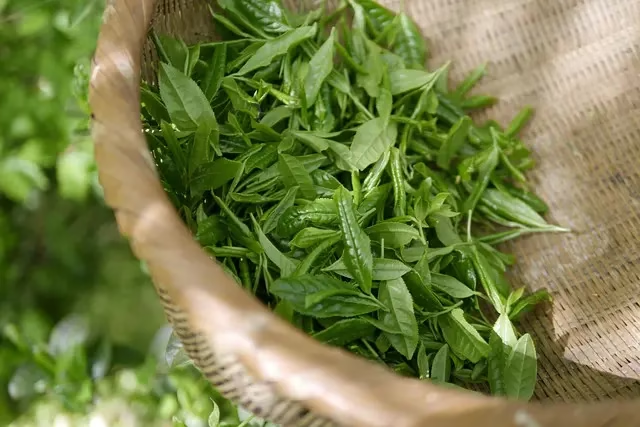
The best quality Longjing comes from leaves picked before the Qingming Festival, which takes place around April 5th. This period is known as:
- Ming Qian (“before Qingming”)
- Considered the gold standard of Longjing
- Represents younger, softer, and more nutritious leaves
The Artisan Roasting
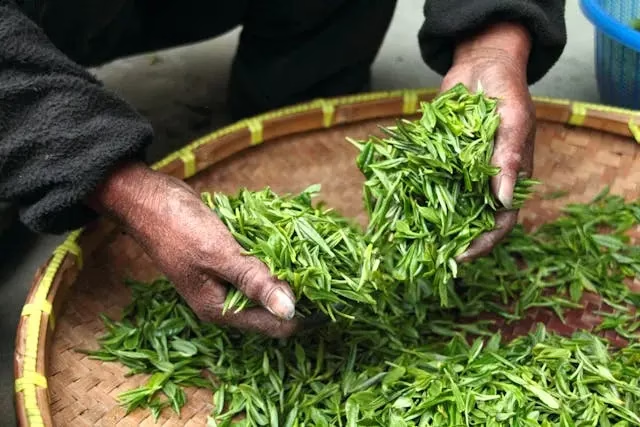
After harvest, each batch of Longjing undergoes a manual process performed in large, heated woks.
This process has three functions:
- Stop oxidation, preserving the vibrant green color.
- Maintain nutrients, such as vitamins, amino acids, and antioxidants.
- Shape the leaves, gently pressing them until they become flat and elongated—the striking visual characteristic of Dragon Well.
The roasting masters use specific techniques of pressure, temperature, and movement, ensuring that each leaf maintains its pure aroma and characteristic flavor.
Why Is Longjing So Highly Valued Worldwide?
Longjing’s prestige comes not only from its history or its flavor—but also from its meticulous and limited production process.
Nature’s Limited Edition
Because its production is restricted, especially in the traditionally recognized geographical area, the supply is naturally small. This makes the tea even more desired by collectors, business leaders, and premium tea connoisseurs.
A Price Worthy of a Treasure
To give an idea of its value, in 2012, a pre-market batch of just 500 grams was sold for an incredible $28,499 USD—surpassing even the price of gold that day.
This exorbitant value is the result of:
- High demand
- Limited production
- Historical tradition
- Cultural prestige
- Unmatched quality
Luxury Gifts and Status Symbol
In modern China, superior quality Longjing is frequently used as a gift between business leaders, officials, and diplomats. It is seen as a symbol of respect, prosperity, and good relations.
Longjing in the Contemporary World: Between Tradition and Global Expansion
Interest in Longjing has expanded far beyond China in recent decades. Today, tea lovers worldwide seek to experience this historic beverage—even if it means acquiring more accessible versions produced outside the traditional region.
Imitations and Popular Versions
The growing popularity has led to the emergence of countless imitations:
- Some use the name “Longjing” merely as a style reference.
- Others attempt to reproduce the roasting method.
- However, few come close to the quality of the original West Lake Longjing.
To distinguish an authentic Longjing, experts recommend observing:
- Fresh, vegetal, and lightly toasted aroma
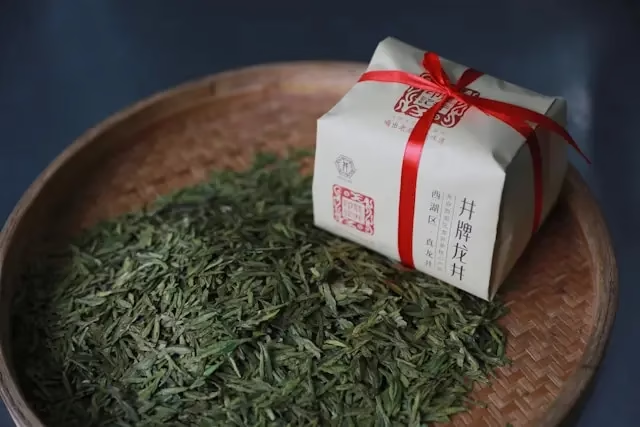
- Brilliant jade-green color
- Flat, uniform leaves
- Smooth, sweet, and lingering flavor
The Health Benefits of Longjing Tea
In addition to its fascinating history, Longjing is valued for its numerous natural benefits. It is rich in:
- Polyphenols and catechins, with strong antioxidant action
- Theanine, responsible for promoting calm and focus
- Vitamins C and B, essential for immunity
- Minerals like potassium and magnesium
Among its main effects on the body are:
- Improved concentration
- Stress reduction
- Anti-inflammatory action
- Metabolism support
- Free radical combat
- Digestion aid
These benefits make Longjing an excellent choice for those seeking health, balance, and well-being.
Conclusion: Longjing, A Heritage of Tea Culture
From its legendary origin to the imperial palaces, from the perfect microclimate to the skilled hands of the tea artisans—Longjing has established itself as one of the most respected and admired teas on the planet.
It represents:
✔ Tradition
✔ Culture
✔ History
✔ Prestige
✔ Sophisticated Flavor
✔ Natural Benefits
Drinking a cup of Longjing is taking a journey through Chinese culture, feeling centuries of wisdom and refinement in every sip.
If you are passionate about premium teas, history, and well-being, leave a comment below:
👉 Have you tried Longjing? What was your experience?
And if you want more articles like this, subscribe to our newsletter and receive exclusive content about teas, oriental traditions, and natural health.
