
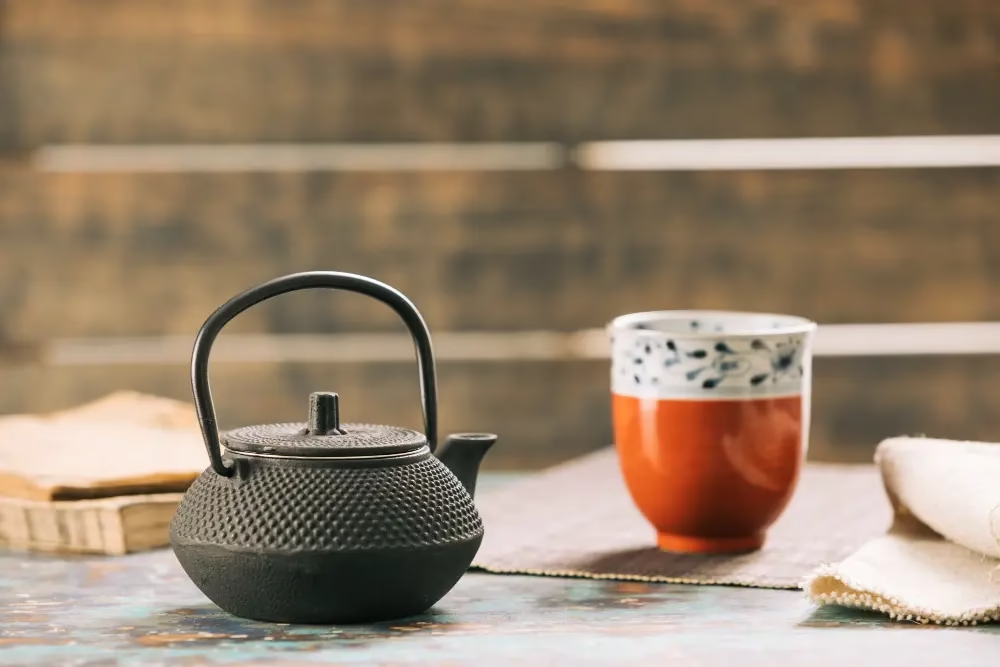
Did you know there’s a Japanese teapot so valuable it was almost wiped out during World War II? Today, these cast iron pieces are considered national treasures and can cost thousands of dollars.
This is the incredible story of Nambu Tekki — traditional Japanese teapots that hold over 400 years of history, survived a devastating war, and are now sought after by collectors worldwide.
Are you ready to discover how a simple teapot became a symbol of cultural resilience and Japanese art?
The Cradle of a Centuries-Old Tradition: Morioka
Imagine the snow-covered mountains of Morioka, in the Iwate region, in the early 17th century. This is where it all began, on the lands of the powerful Nambu clan — a feudal family that would lend its name to one of Japan’s most prestigious artisan traditions.
Why This Exact Location?
Nature was generous to the Morioka region, providing all the essential elements to create cast iron masterpieces:
- High-quality iron sand from the local mountains.
- Special clay with unique properties for molds.
- Abundant charcoal to fuel the furnaces.
- Natural lacquer for finishing and protection.
It was like having all the ingredients for a secret recipe gathered in one place. It’s no wonder the tradition flourished right there!
The Family Tradition: Secrets Passed Down Through Generations
One of the most fascinating characteristics of Nambu Tekki is its profoundly family-based nature. The secrets of the foundry were not taught in schools—they were transmitted exclusively within artisan families.
The Ancestral Designs
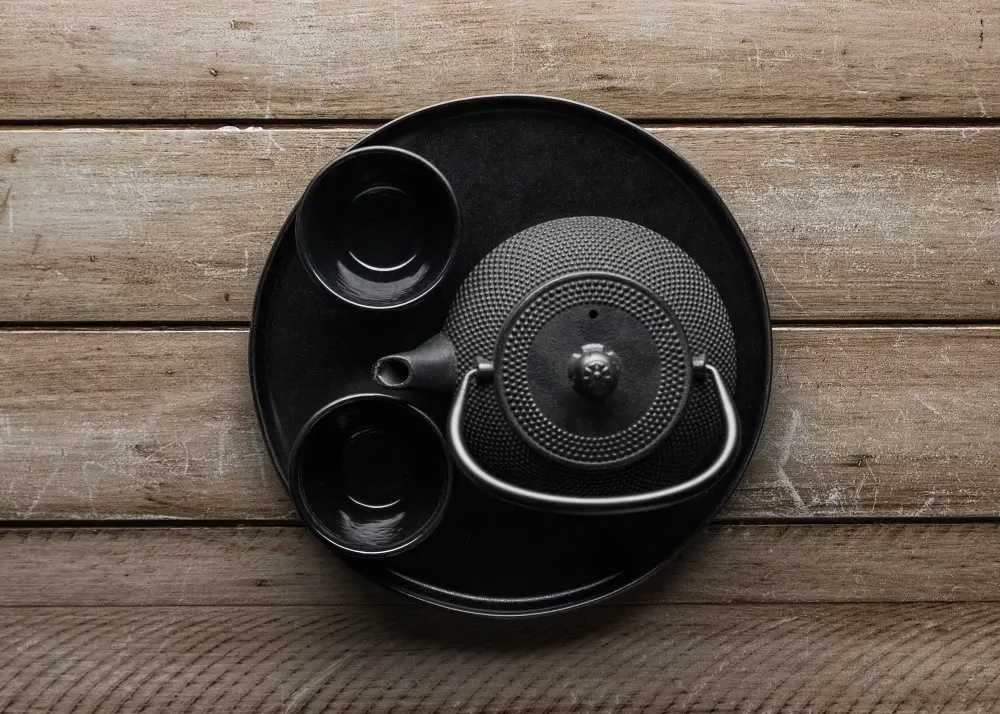
Each family has unique original designs, some hundreds of years old. These patterns represent:
- Symbols of protection against evil spirits.
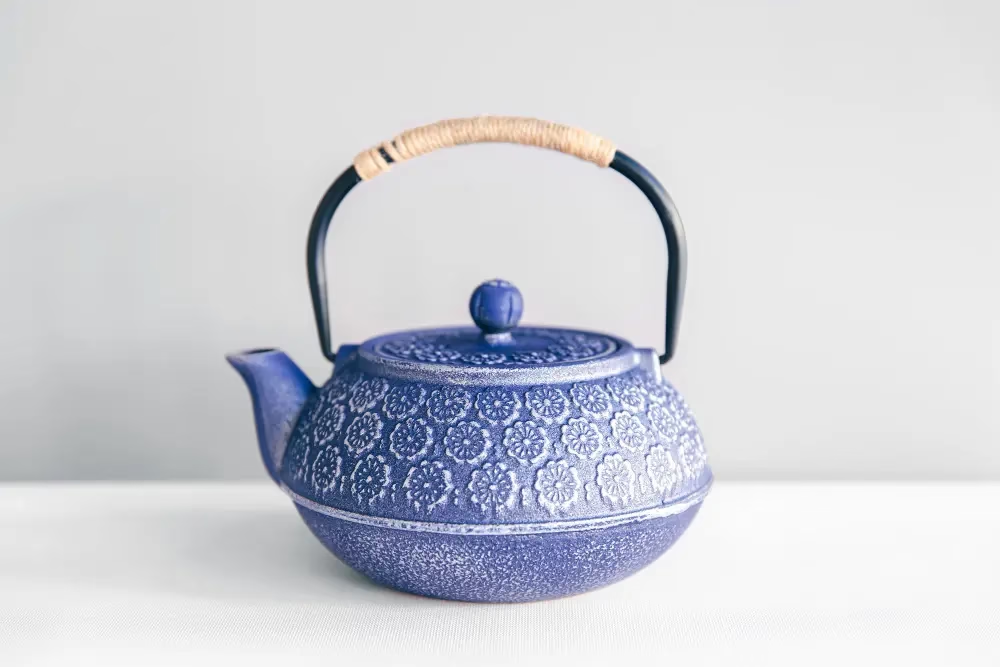
- Elements of nature (waves, cherry blossoms, clouds).
- Sacred Buddhist and Shinto geometries.
- Marks that identify the master artisan.
These designs are true artistic genetic codes, more valuable than any material property.
A Lifetime of Learning
Becoming a master of Nambu Tekki isn’t a journey of a few years—it’s a lifelong commitment:
- Years 1-5: Only observing the master at work.
- Years 6-15: Starting with simple pieces.
- Years 16-25: Creating independent pieces.
- After 25 years: Possible recognition as a master.
Impressive, isn’t it? Imagine dedicating 25 years to mastering a single art!
1938: The Year That Almost Destroyed Everything
We’ve arrived at the most dramatic part of the story. During World War II, the Japanese government enacted devastating regulations: all citizens had to hand over iron objects to be melted down and turned into armaments.
The Devastating Decree
Imagine the emotional impact: families who had preserved teapots for generations were forced to hand them over to be destroyed. It was like watching centuries of history being literally melted down.
In addition, workshops were forbidden from producing new teapots. The government considered this activity a “waste of strategic resources.”
The Unsung Heroes
But here’s the most inspiring part: a courageous group of artisans secretly organized to preserve the art of Nambu Tekki. They formed an underground society that:
- Hid important tools and molds.
- Secretly documented techniques.
- Discreetly trained young people.
- Preserved original designs.
These heroes literally saved a national tradition from extinction, risking their own lives.
1974: The Official Revival
The definitive turning point came in 1974, when the Japanese government passed the “Law for the Promotion of Traditional Craft Industries.”
Nambu Tekki: The First National Treasure
Nambu Tekki was chosen as the first craft to receive the official designation of “Traditional Craft of Japan.” This designation brought crucial benefits:
- Government funding for workshops.
- Training programs for new artisans.
- Educational campaigns for the public.
- Legal protection of traditional methods.
And do you know what this means for someone who owns a piece today? Guaranteed historical and financial value!
How a Nambu Tekki Teapot is Born
Even with all the modern technology, artisans maintain the exact same methods from 400 years ago. It’s a conscious decision to preserve a quality and energy that machines cannot replicate.
The 6 Sacred Steps
- Creating the Mold with “Magic Earth”: Sifted iron sand, clay with specific properties, and powdered charcoal for controlled porosity.
- Sculpting the Ancestral Patterns: Using tools from the Edo period, such as kanna (bamboo planes), hangi (wooden stamps), and sasara (bamboo brushes).
- Ritual Drying: Molds are dried in furnaces at 800-1000°C—a ritual of spiritual purification.
- The Iron Alchemy: Iron is heated to an impressive 1500°C, shining like volcanic lava.
- The Resonance Test: Each teapot has its own unique “sound” that reveals internal imperfections.
- Protective Finish: Two special firings create a patina that improves over time.
Why It’s So Valuable: The Unique Benefits
“Why pay thousands for a teapot when I can buy a cheaper electric one?” The answer goes far beyond decoration.
Health Benefits
Japanese studies have proven that Nambu Tekki teapots:
- Release naturally bioavailable iron into the water.
- Reduce anemia in regular users.
- Neutralize chlorine and chemicals from the water.
- Improve the overall quality of heated water.
Functional Superiority
- Incomparable heat retention: Keeps water hot for hours.
- Improved flavor: The water becomes “softer” and purer.
- Meditative experience: A ritual that connects you with ancient traditions.
It’s not just a teapot—it’s therapy disguised as tea preparation!
How to Identify Authentic Pieces
The market is full of imitations manufactured in China. Signs of authenticity:
- Official Japanese certification mark.
- Artisan’s signature on the base.
- Significant weight (genuine cast iron is heavy).
- Internal finish without synthetic coatings.
- Provenance documentation.
Inspiring Stories
- Massimo Bottura, a three-Michelin-star chef, exclusively uses Nambu Tekki teapots in his restaurant and credits them for improving the quality of his teas and broths.
- Sarah Chen, an American entrepreneur, owns one of the largest collections outside of Japan and personally funded the reopening of a family workshop.
Essential Care: Preserving Your Treasure
If you acquire a Nambu Tekki teapot, proper care ensures it will last for centuries.
Daily Care
After each use:
- Completely empty it while still hot.
- Let it dry naturally with the lid open.
- Never use detergents.
- Clean with warm water only if necessary.
What You Should NEVER Do ❌
- Use soap or detergent.
- Leave water standing inside.
- Put it in the dishwasher.
- Use abrasive sponges.
What You Should ALWAYS Do ✅
- Dry completely after use.
- Store in a dry place.
- Heat it gradually.
- Use only pure water.
By following these tips, your teapot can last for generations!
The Future of the Tradition
What will the future of Nambu Tekki be in a digital world?
Current Challenges
- Young Japanese people prefer technological careers.
- Rising material costs.
- Competition from cheap imitations.
Opportunities
- Cultural tourism in workshops.
- Partnerships with international chefs.
- Educational digital marketing.
- Courses for foreigners.
New Generation of Artisans
Fortunately, young artisans are emerging:
- Takeshi Yamamoto (32): Uses social media to teach techniques.
- Keiko Suzuki (28): One of the few female masters.
- Hiroshi Tanaka (35): Develops new designs while maintaining ancestral methods.
More Than a Teapot: A Life Lesson
The story of Nambu Tekki teaches us about:
- Resilience: How art survives war and modernization.
- Quality: In a disposable world, objects are made to last for centuries.
- Connection: Simple rituals connect us with ancient traditions.
- Value: True luxury lies in history and meaning.
Applying the Principles to Your Life
You don’t need to own a Nambu Tekki teapot to be inspired:
- Value quality over quantity.
- Respect traditions without failing to innovate.
- Find beauty in daily rituals.
- Create legacies for future generations.
The next time you make a hot drink, remember this story. Think of the artisans who dedicated their entire lives to a single art form.
Did you enjoy learning about the history of Nambu Tekki teapots? Share this article with someone who appreciates traditional art and Japanese culture. Together, we can value and preserve these ancient traditions!
