
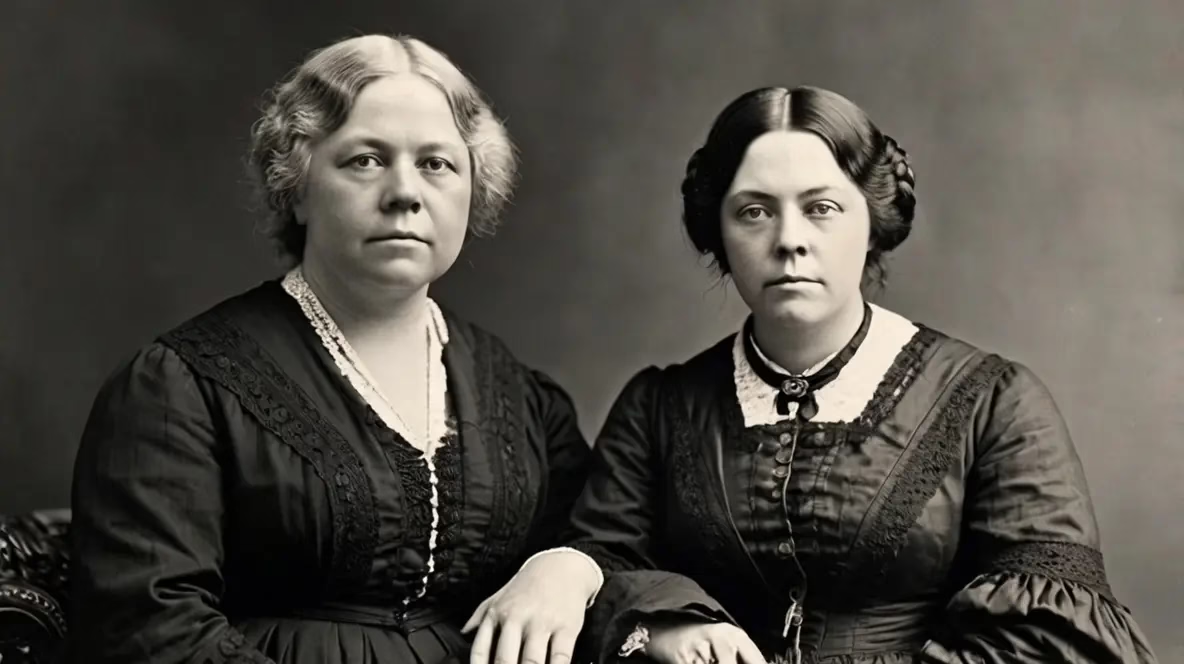
Have you ever thought that a simple meeting between friends could transform the future of humanity? That’s exactly what happened in 1848, when five women gathered over a cup of tea in Waterloo, New York, and started the suffragist movement that would forever change women’s rights.
The Waterloo Meeting: Where It All Began
On July 9, 1848, Jane Hunt hosted four visionary women at her home: Elizabeth Cady Stanton, Lucretia Mott, Martha Wright, and Mary Ann McClintock. What seemed like just an afternoon tea turned into a historical milestone, giving rise to the first women’s rights convention in the United States.
The Protagonists
- Elizabeth Cady Stanton – A brilliant intellectual and orator.
- Lucretia Mott – A Quaker minister and abolitionist activist.
- Martha Wright – A social justice advocate.
- Mary Ann McClintock – A fervent abolitionist.
- Jane Hunt – The hostess and catalyst of the meeting.
The Roots of the Revolt: London, 1840
The spark for these women’s indignation occurred eight years earlier, during the World Anti-Slavery Convention in London. Even as delegates and activists, they were prevented from participating in the debates. This exclusion was decisive for Stanton and Mott, who vowed to create a movement focused exclusively on women’s rights.
The Context of 1848: Why It Was the Right Time
The world stage was teeming with transformations:
- Popular revolutions were taking place in Europe.
- The abolitionist movement was gaining strength in the United States.
- Within the Quaker community itself, the “Progressive Friends” group was emerging, advocating for greater equality between men and women.
This environment of social change was the perfect spark for the fight for women’s rights.

The Injustices That United the Women
During the tea, the friends shared the injustices they experienced daily:
- Denied access to education and intellectual professions.
- A complete lack of political rights.
- Economic dependence on men.
- Loss of child custody in separations.
- Domestic violence tolerated by law.
It was at this moment that they decided to act.
The Birth of the Seneca Falls Convention
A few days after the meeting, the five women organized the first women’s rights convention. The event, held on July 19 and 20, 1848, brought together hundreds of people and laid the groundwork for the suffragist movement.
The Declaration of Sentiments
Inspired by the U.S. Declaration of Independence, the Declaration of Sentiments denounced inequalities and demanded changes, including:
- The right to vote.
- Access to higher education.
- The right to property and wages.
- Equality in marriage.
- Participation in political and religious offices.
Seven Decades of Organized Struggle
From Seneca Falls on, the movement grew and strengthened for over 70 years, with varied strategies:
Educational Campaigns
- Public lectures and pamphlets.
- University debates.
Political Activism
- Petitions to Congress.
- Lobbying with legislators.
Protests and Civil Disobedience
- Marches and picketing in front of the White House.
- Hunger strikes while imprisoned.
- Attempts at illegal voting.
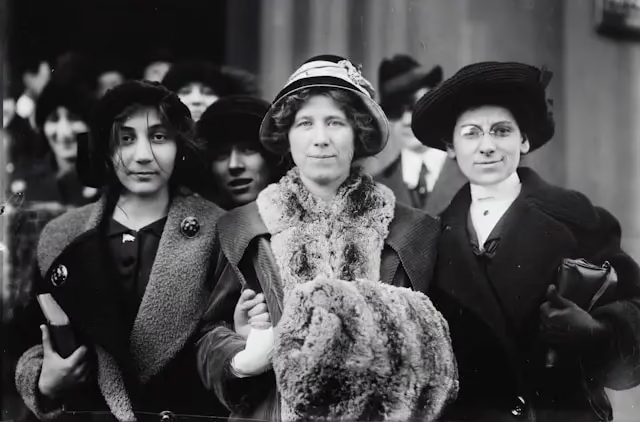
Iconic Figures of the Movement
Among the many leaders who emerged, some became symbols of the resistance:
- Susan B. Anthony – Arrested for illegally voting.
- Alice Paul – Organizer of the White House pickets.
- Carrie Chapman Catt – Strategist for the final phase.
- Jeannette Rankin – The first American congresswoman.
The Victory: The 19th Amendment of 1920
After 72 years of mobilization, on August 26, 1920, the 19th Amendment to the U.S. Constitution was approved, guaranteeing women the right to vote. This was a milestone not only for the United States but for women worldwide, including in Brazil, which won this right in 1932.
Lessons Left by the Suffragist Movement
The story that began with a simple afternoon tea offers timeless lessons:
- Great changes begin with small conversations.
- Indignation needs organization to make an impact.
- A diversity of tactics strengthens the movement.
- Persistence across generations is essential.
Challenges That Still Persist
More than a century later, we still face barriers:
- Wage inequality.
- Domestic violence.
- Underrepresentation in leadership positions.
- Barriers in science and technology fields.
How to Apply the Lessons Today
- Create spaces for dialogue and active listening.
- Use social media to amplify voices.
- Form alliances between different causes.
- Celebrate victories, even the small ones.

Conclusion: The Power of a Conversation
That tea in Waterloo reminds us that revolutions can start in the simplest of places. Every meeting is an opportunity to plant seeds of change.
What about you, have you thought about what changes you could start from a simple conversation? Reflect on this story and share this article to inspire more people to believe in the transformative power of dialogue.
Before trying any tips from this post—such as exercises or herbal teas—be sure to consult a doctor, nutritionist, or qualified health professional. Your body is unique, and taking the right precautions is the first step to a healthy life.
